19 August 2026 · how we work
Nobody photographs the side
A ring is bought from one view and worn from every other.

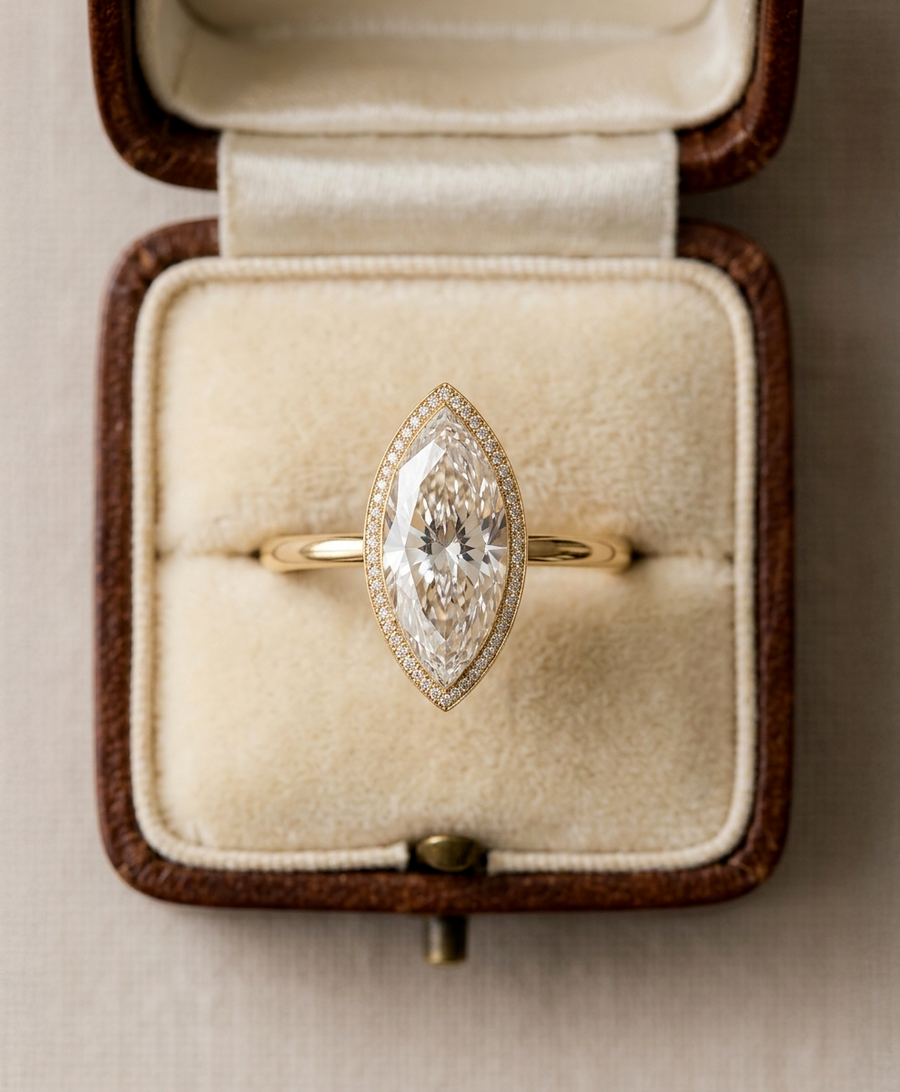
Open any jeweller's site and scroll. Every ring is photographed from directly above.
There are good reasons. Face up is the cheapest view to light, the easiest to make consistent across a hundred products, and the only one in which two rings can be honestly compared on a grid. It is also the most flattering. A stone looks its widest from above, and metal looks its thinnest.
The trouble is what that does to the object.
What gets optimised
When a category is judged in one view, it starts being designed for that view. Claws are drawn to look neat from above. Galleries get taller because height does not show. Shoulders are finished where the camera sees them and left rough where it does not. None of this is dishonest — it is simply what happens when the photograph is the thing being sold and the ring is what arrives afterwards.
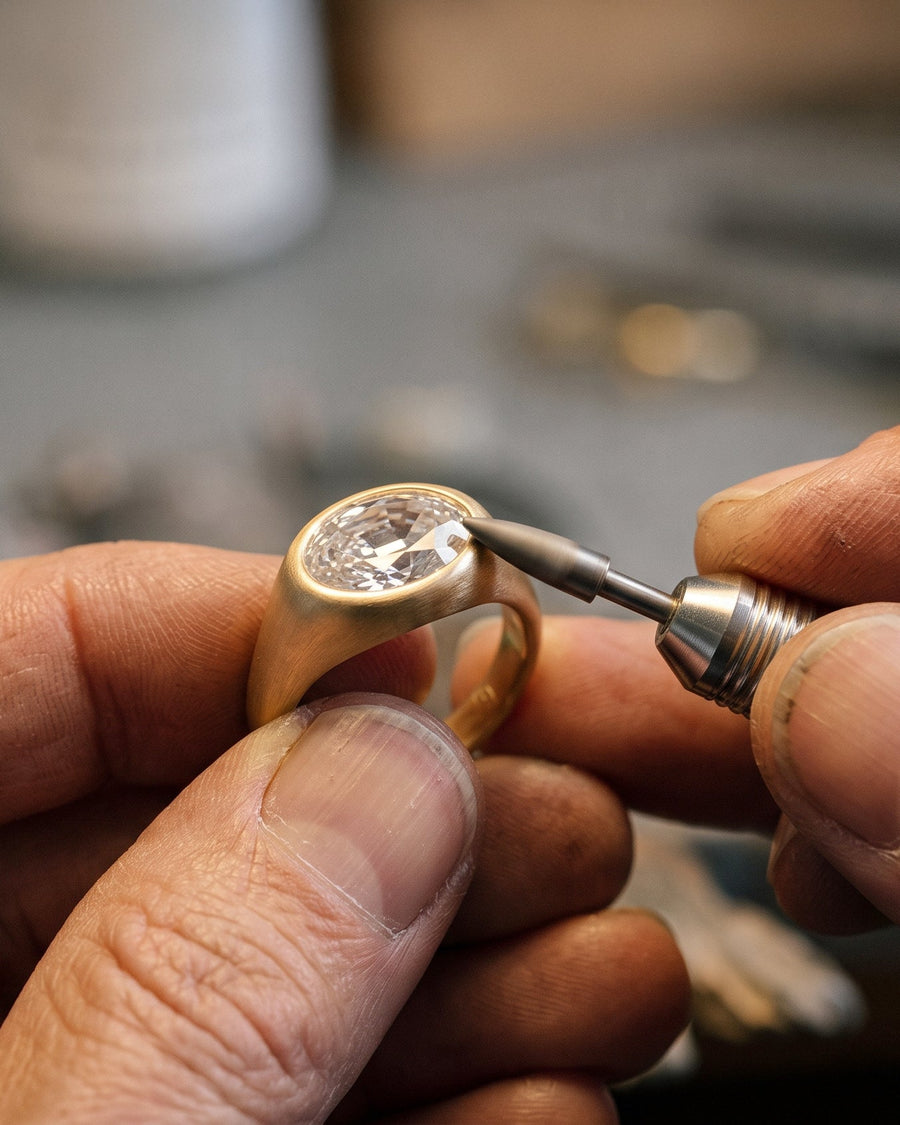
You notice it the first time you look at a setting from the side and find there is nothing there. A wall of metal holding a stone up in the air, resolved from above and unresolved from every other angle.
What the side actually shows
Three things, and none of them appear face up.
How high the stone sits. A tall setting catches on everything and reads as perched. You cannot tell from above whether a ring is lifted or stilted.
Whether the structure is real. From the side you can see if the shoulders carry the seat or merely arrive at it. A ring either has architecture or it has a good angle.
What happens when a band goes next to it. Most engagement rings are eventually worn with a second ring against them, and whether that works is decided entirely by the profile.
We are not against the photograph
Face up matters. It is how a stone's spread reads, and spread is most of what makes a diamond look like what you paid for. We shoot it, and we care about it.
The claim is narrower than that: face up should not be the view a ring is decided in. Ours are drawn from the side first and checked from above afterwards, which is the opposite order from the trade, and it is the reason the Cutaway exists at all. Cutting the gallery open was a decision made in profile. It is invisible in a face-up photograph, and it changes how the ring sits, how light reaches the stone, and whether a band lies flush.
A test you can use on anyone
Ask any jeweller for an exact side elevation of the ring you are considering. Not a three-quarter view, which flatters, and not on a hand. The exact profile, straight on.
You will get one of three answers. Some will send it immediately. Some will send a three-quarter instead and hope you do not notice the difference. Some will not have one, because nobody has ever asked and the ring was never resolved in that direction.
The answer tells you what you need to know, and it costs you one email.
MARLII LAB · London and Australia