The MARLII Cutaway
Most settings close the space beneath a diamond. We cut it away.
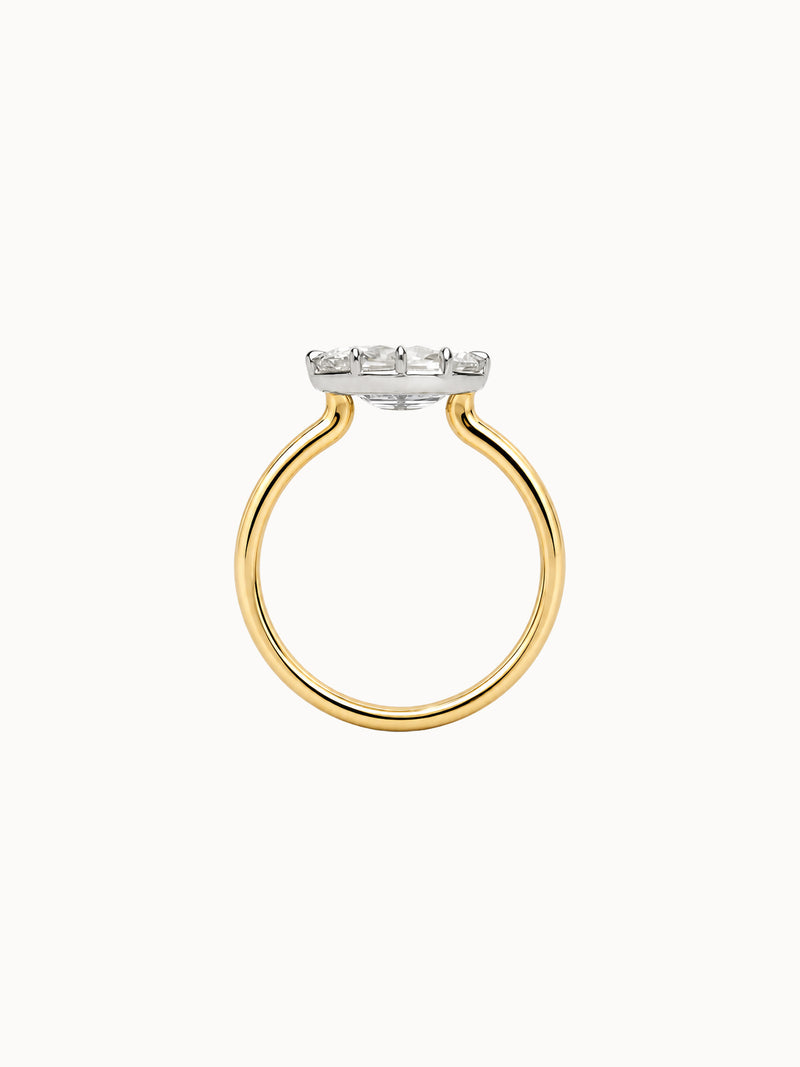
A modern brilliant is built to throw light back at you. An old cut holds it instead, which is why it glows rather than sparkles — and why it needs more light to do it. The gallery beneath the stone is sculpted open so light reaches the pavilion from below as well as from above.

Marquise Cutaway · profile
It was never about making them brighter.
Antique and old mine diamonds were cut by hand, for candlelight. They do not throw light back the way a modern brilliant does — they hold it. Which means they need a great deal of it to come alive, and a stone set over solid metal is lit from one direction only.
That is the problem we were trying to solve. Not a stylistic one.
What it does
Three consequences.
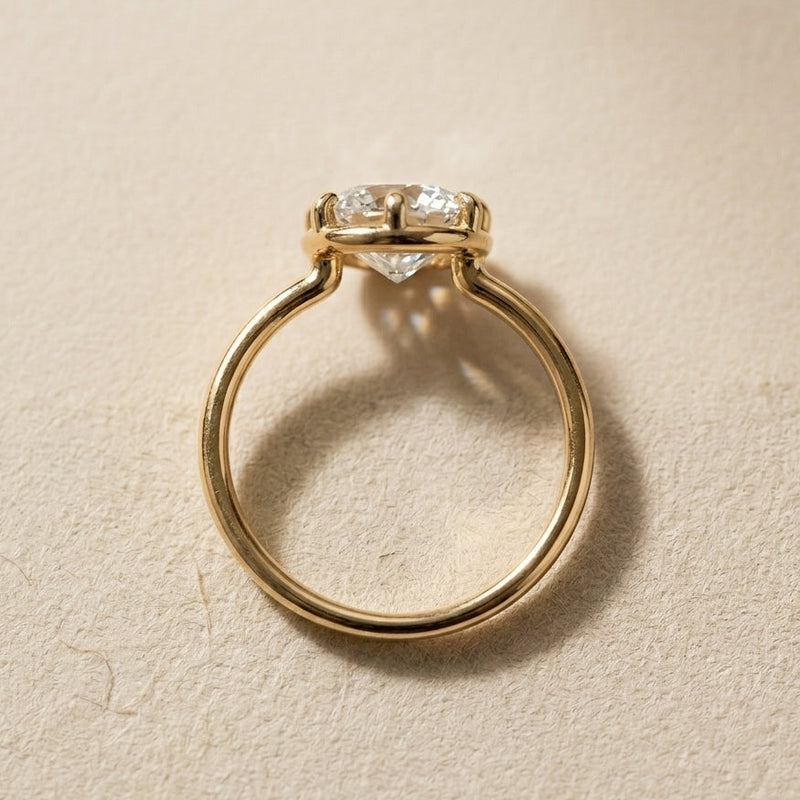
Light from beneath
With the gallery open, light enters through the pavilion as well as the table. An old cut stops sitting in shadow and starts to glow, which is what these stones do when they are given enough of it.
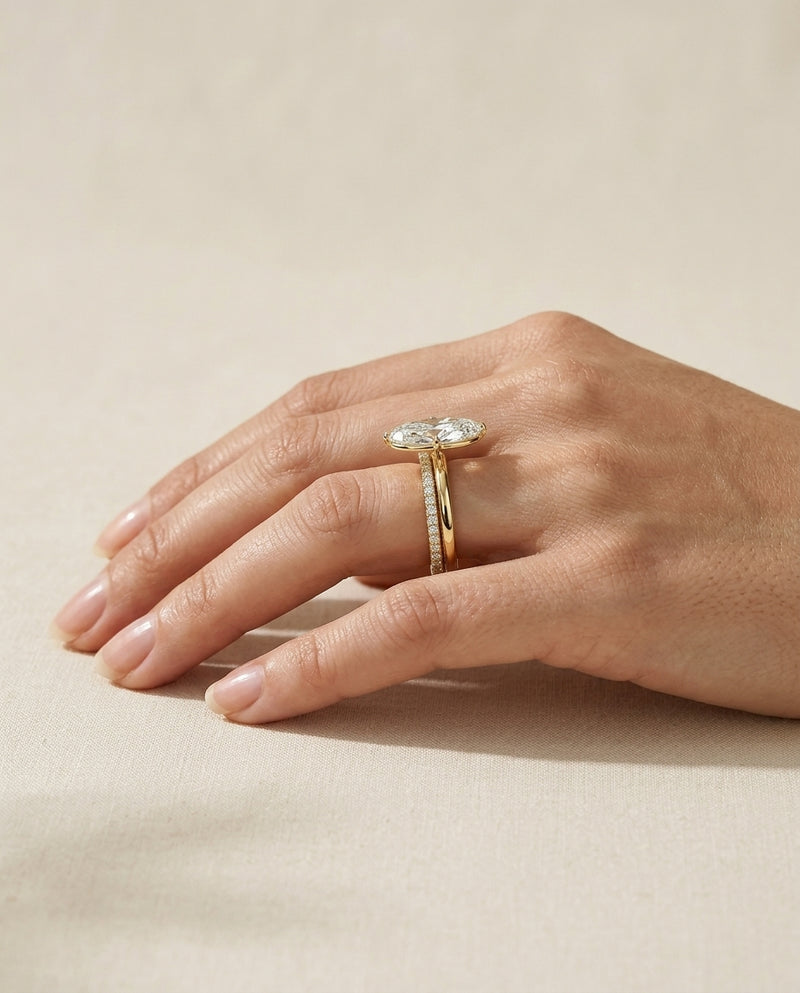
Closer to the finger
Removing metal beneath the stone lowers the seat. The ring sits closer to the hand rather than perched above it, and reads as lifted rather than tall.
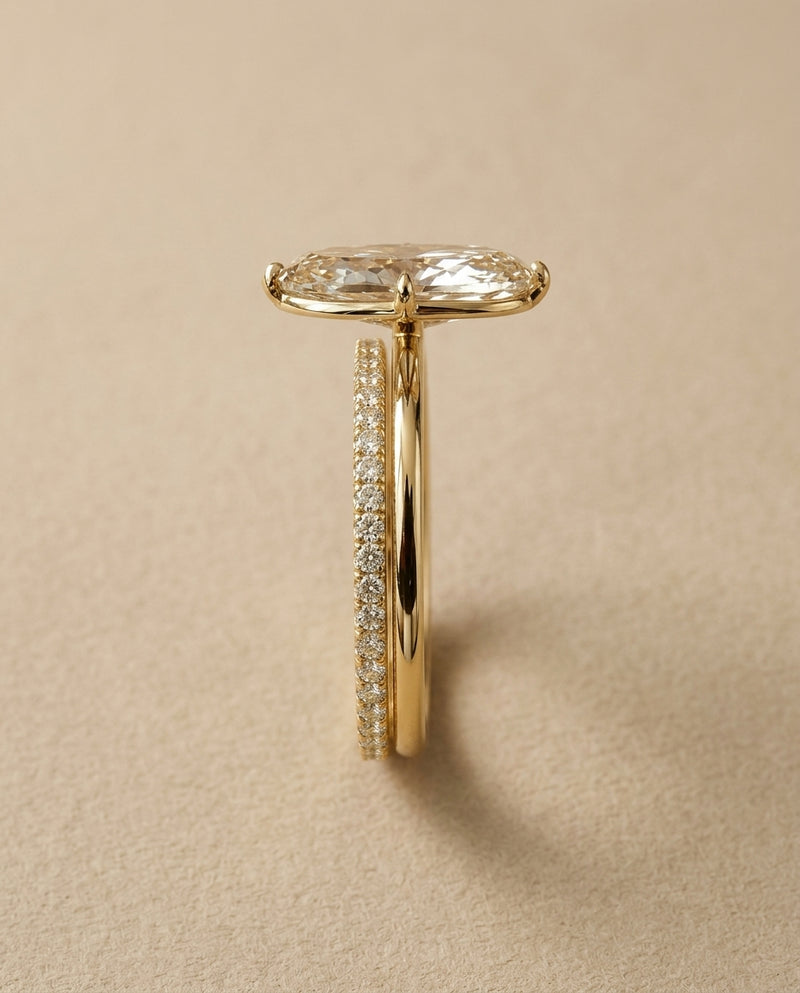
A flush band, still
A low setting usually fights the wedding band that follows it. This one does not — a straight band still sits flush against it, which was not the plan so much as the gift.
Found, rather than designed.
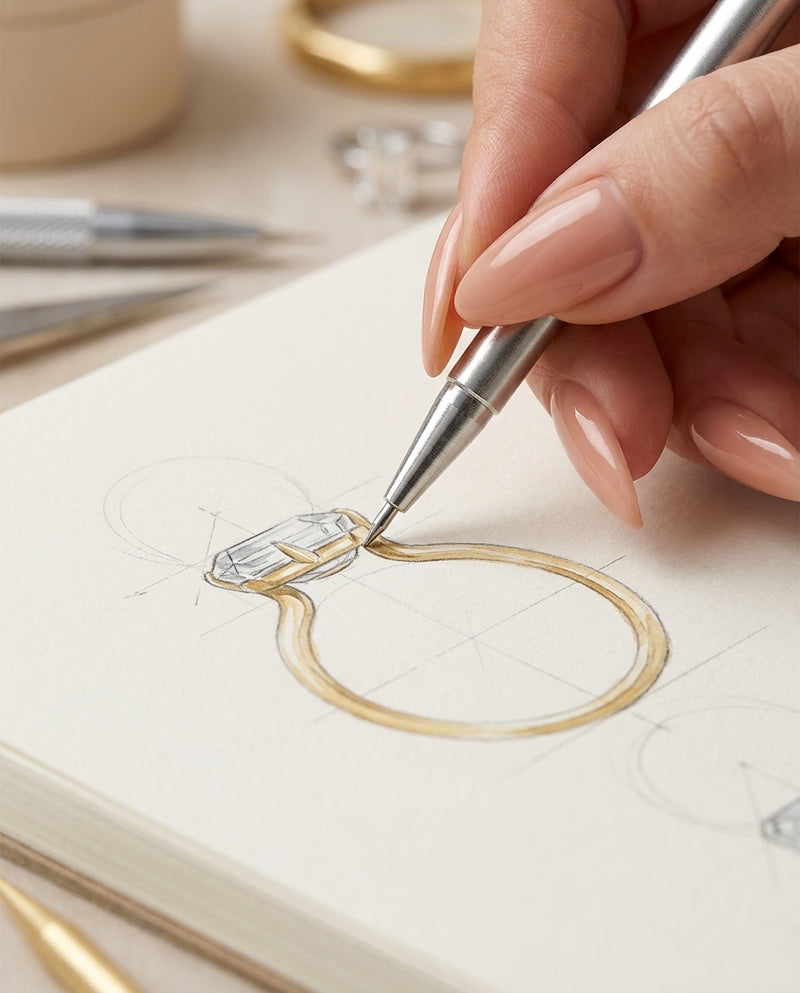
The Cutaway came out of a long run of work in the studio, looking for ways to open up the underside of an old mine diamond and get light into it. Cutting the band away beneath the stone began as an experiment.
What came back was more than the light. The setting opened the whole diamond from beneath, dropped its height closer to the finger, and still took a flush wedding band against it — three things that usually pull against each other. We had gone looking for one and found all three.
It is sculpted after the centre diamond is chosen, to that stone's depth and outline. The same setting made twice, for two different diamonds, is not the same piece of metal — which is also why none are held in stock. The gallery cannot be cut until the stone exists.
Where it is not used
Five settings, deliberately closed.
A technique applied to everything stops being a decision. Five settings are built closed, because their structure depends on the metal beneath the stone rather than in spite of it.
| Rope-Set Old Mine Cushion | The twisted rope carries the seat; opening it would leave nothing to hold |
| Offset Pear | The split band needs a closed gallery to stay rigid |
| Tilted Old Mine Pear | The tilt is held by the structure underneath |
| Sculptural Old Mine Cushion | The wrap is the gallery |
| Oval Cathedral | Cathedral shoulders rise into a solid seat by definition |
27 settings carry it
The settings that carry it.
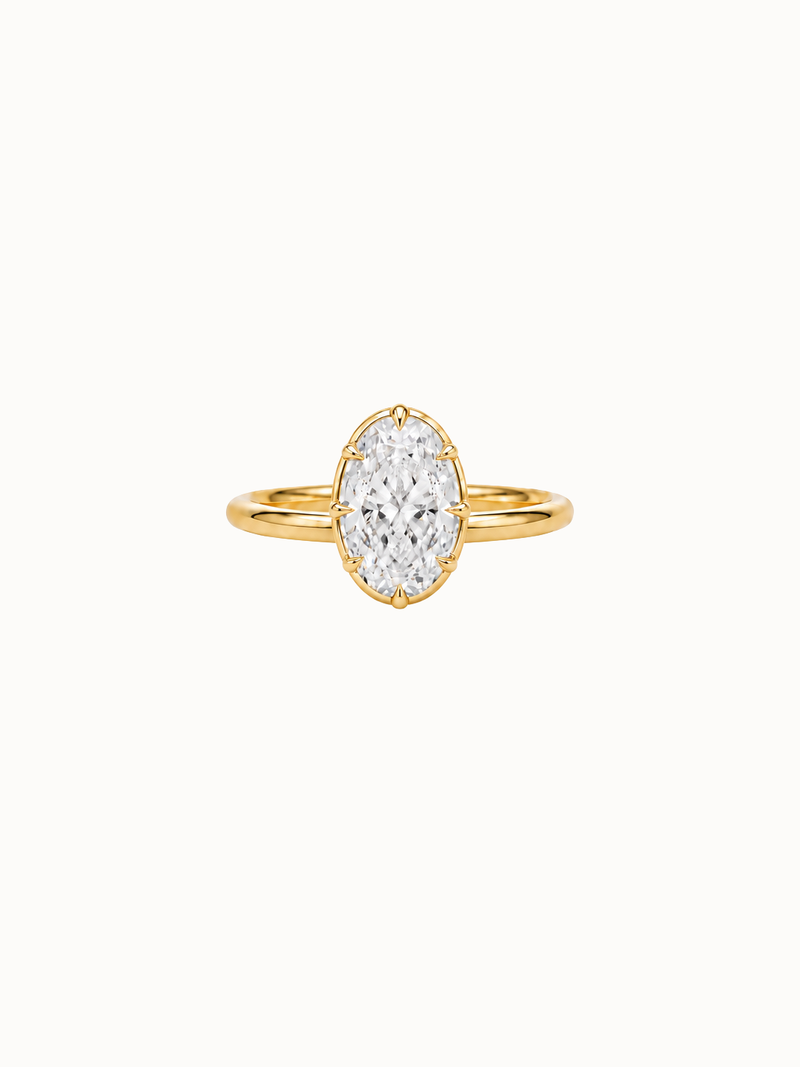
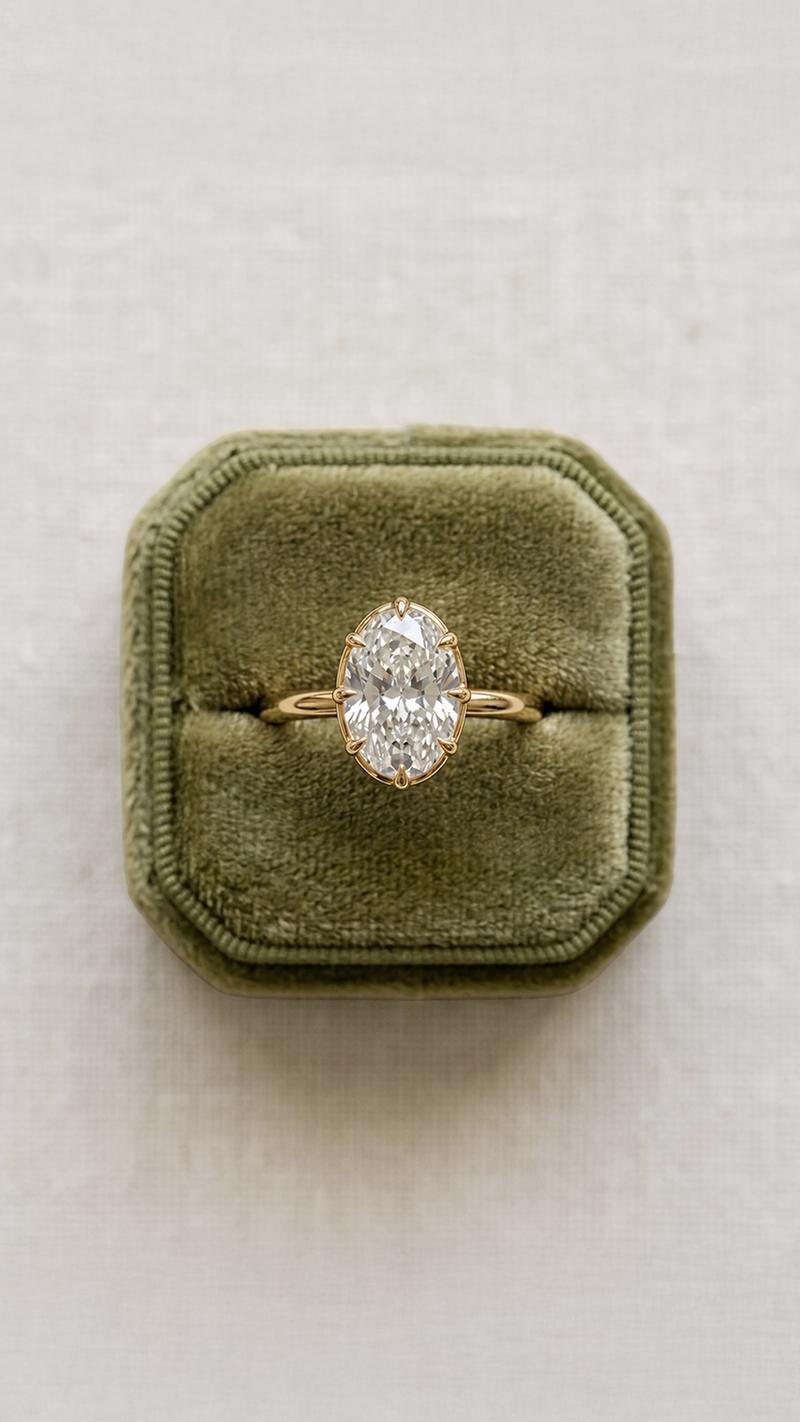
Georgian 2.85ct Oval
£6,766.00 Size N
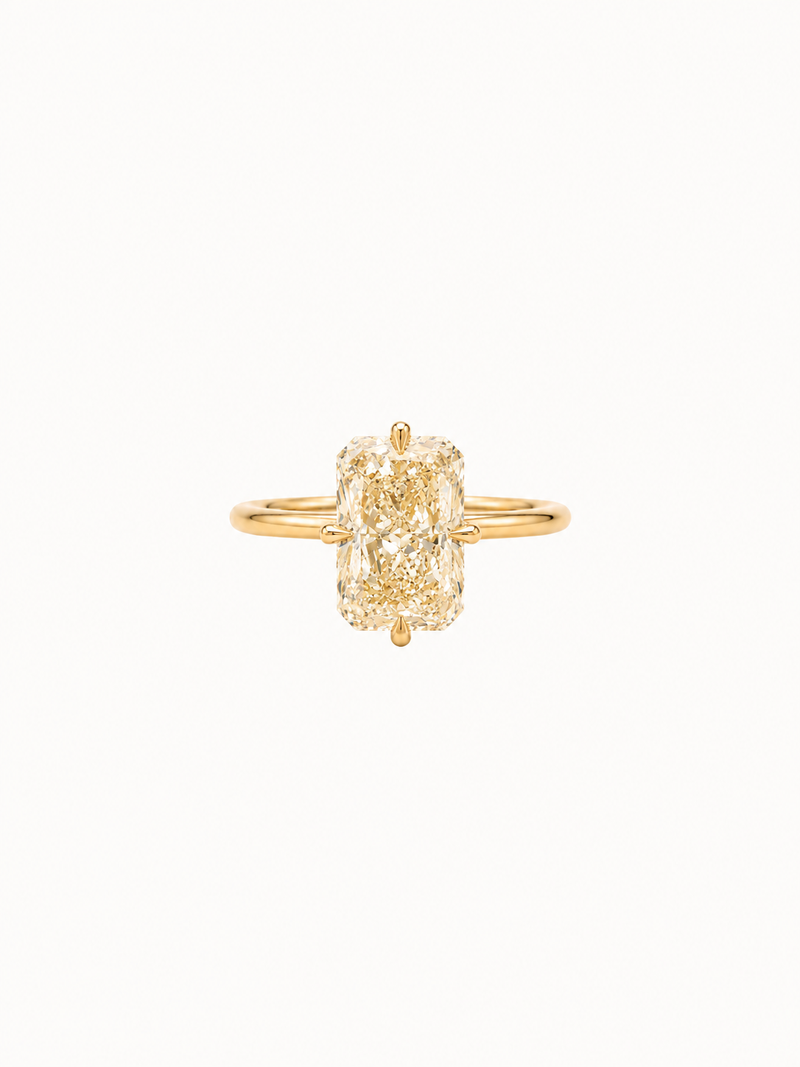
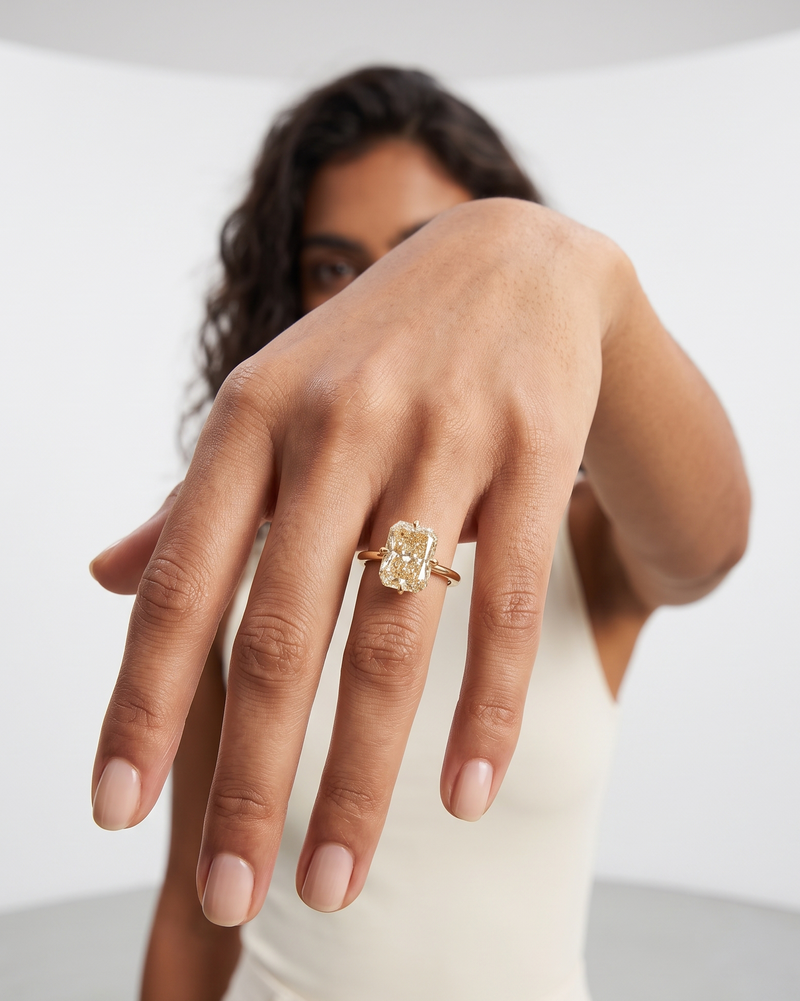
Cutaway Champagne Elongated Radiant
From £3,527.00
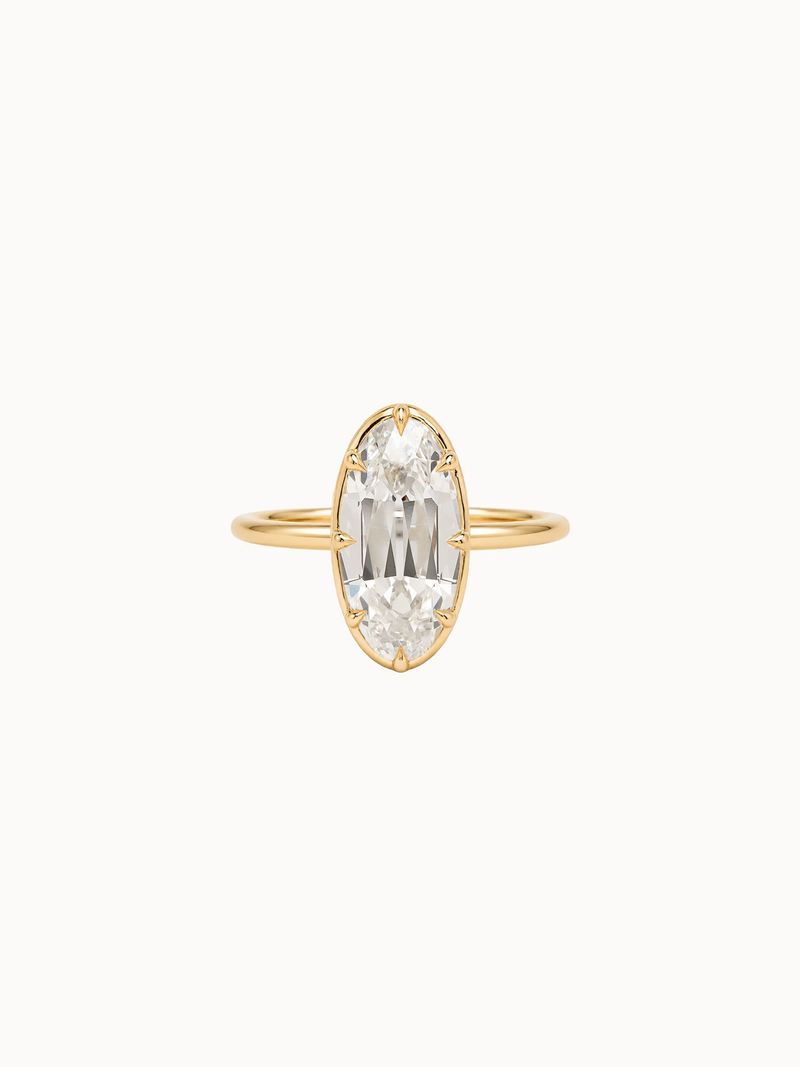
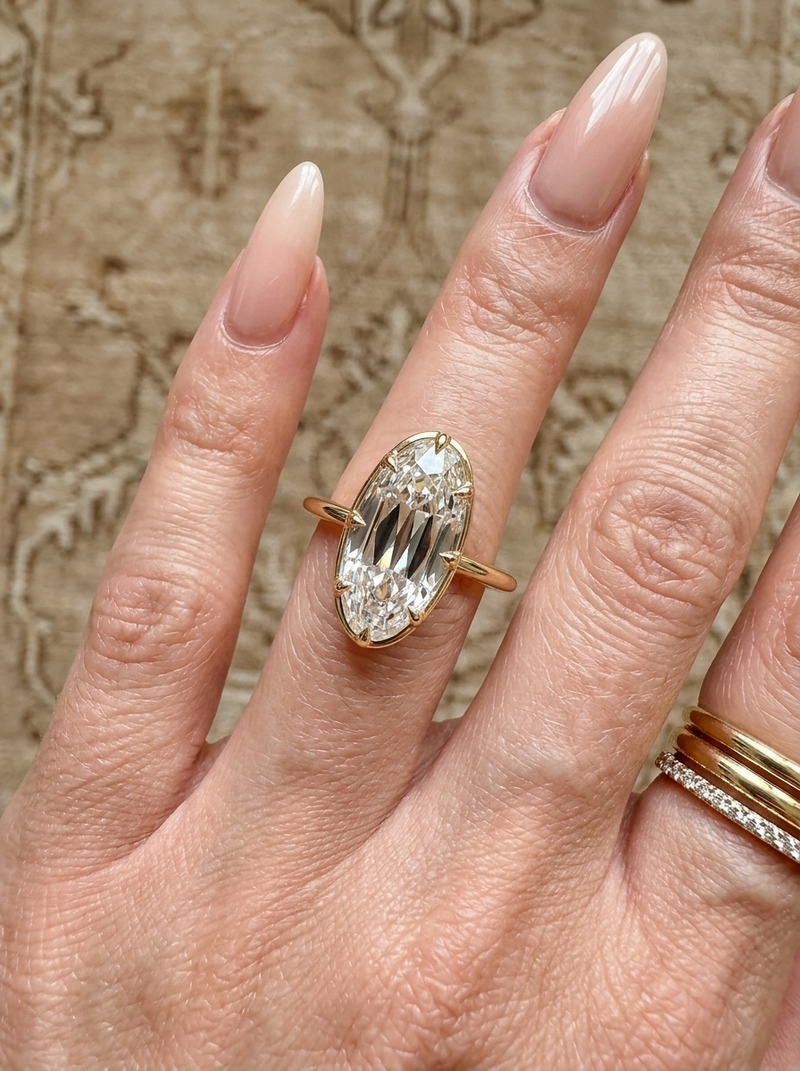
Georgian Moval
From £3,634.00
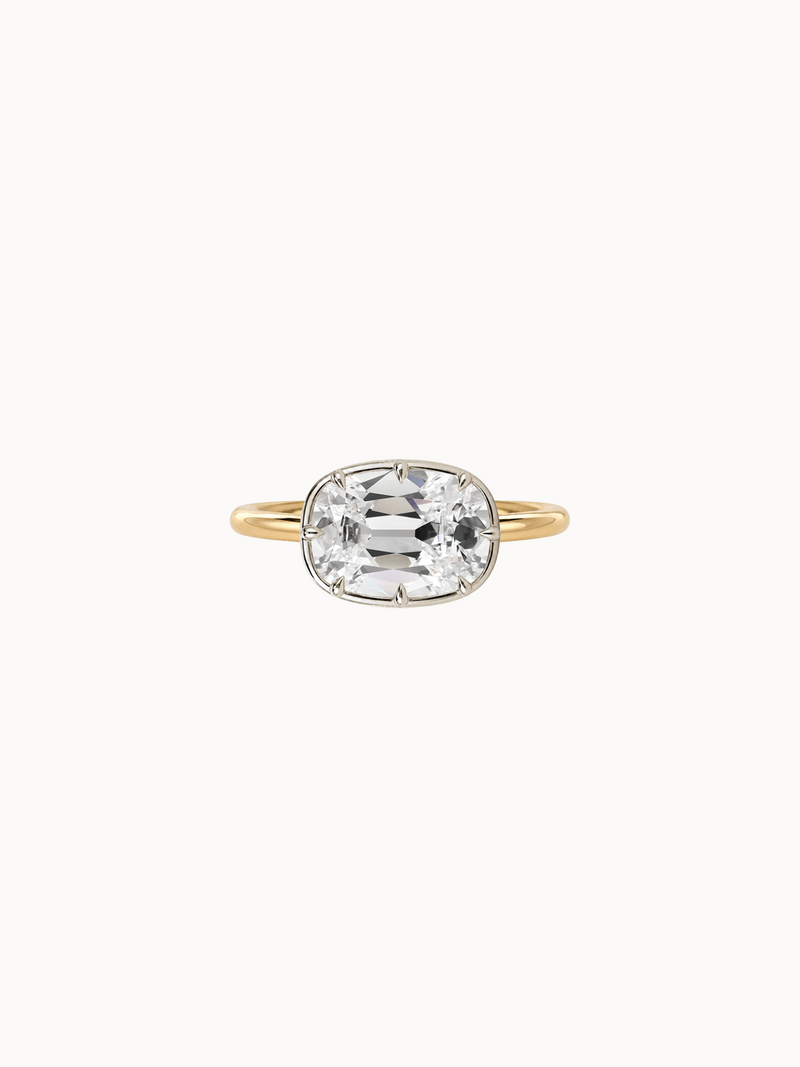
East-West Georgian Cushion
From £3,900.00
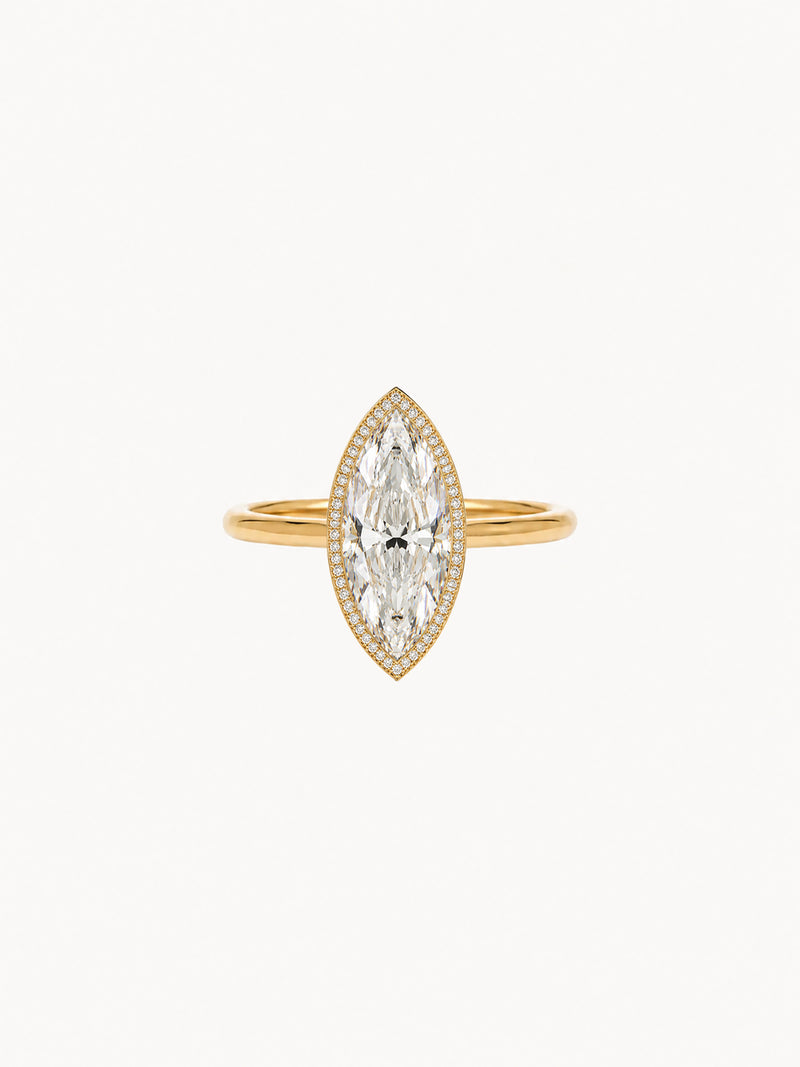
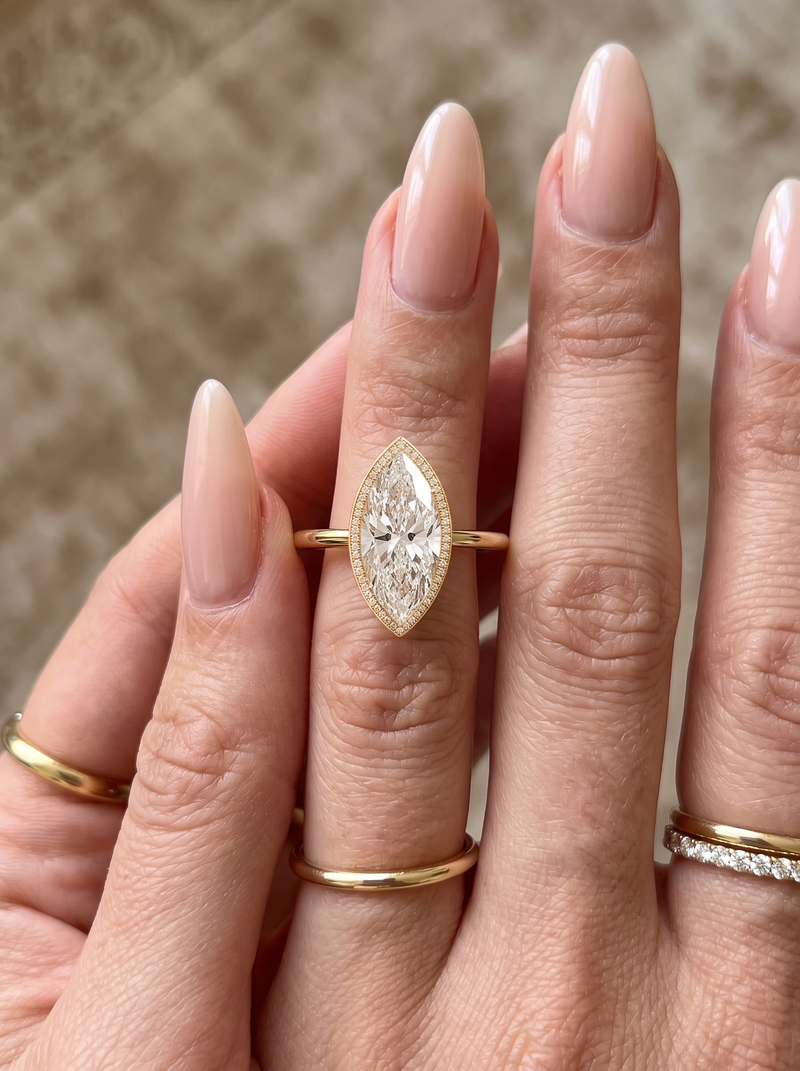
Pavé Bezel Marquise
From £4,160.00
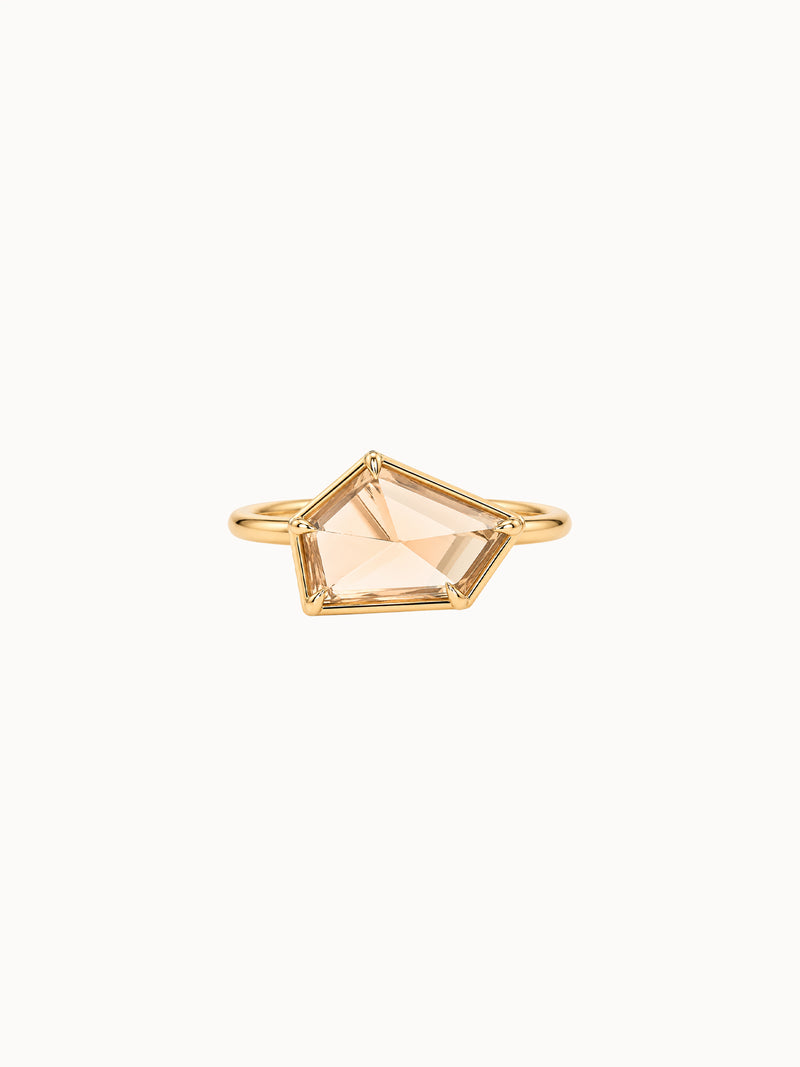
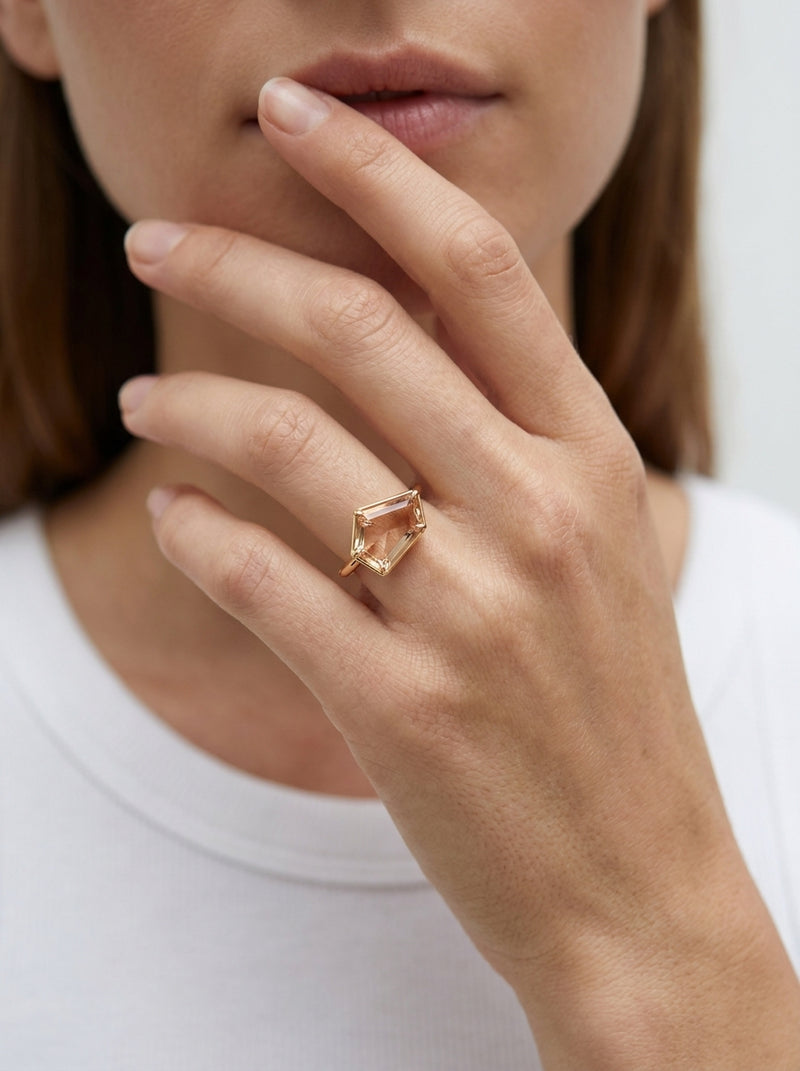
Framed Freeform Champagne
From £3,950.00
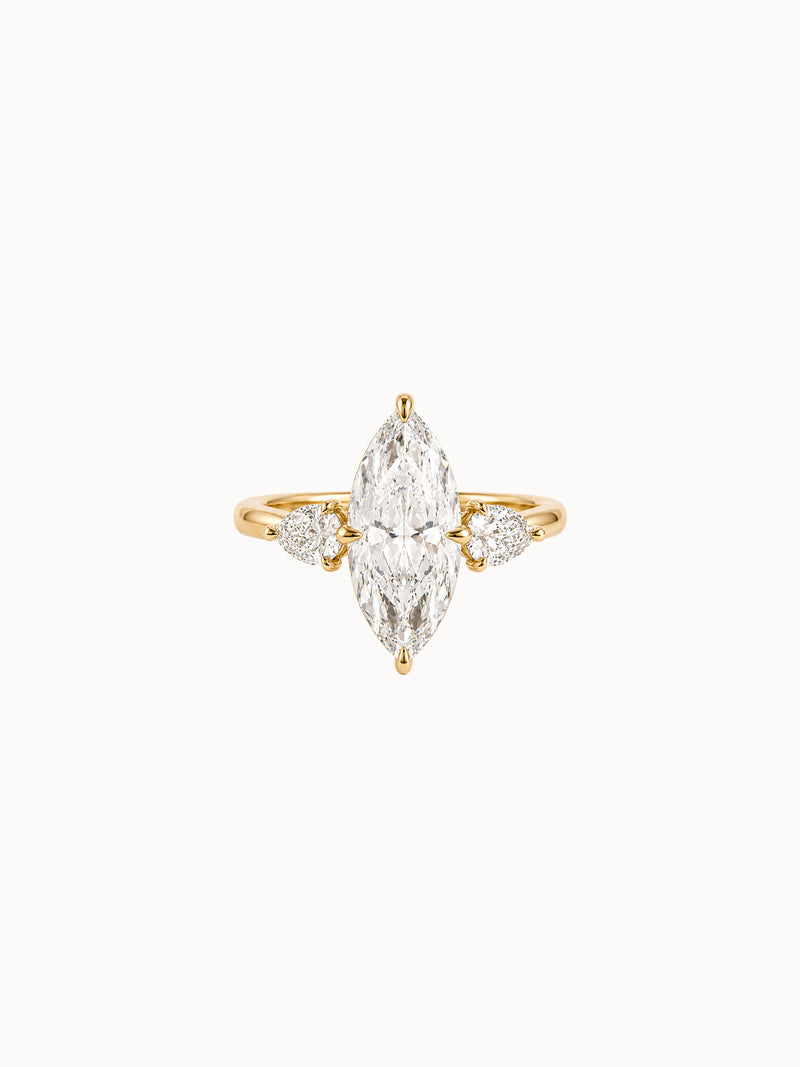
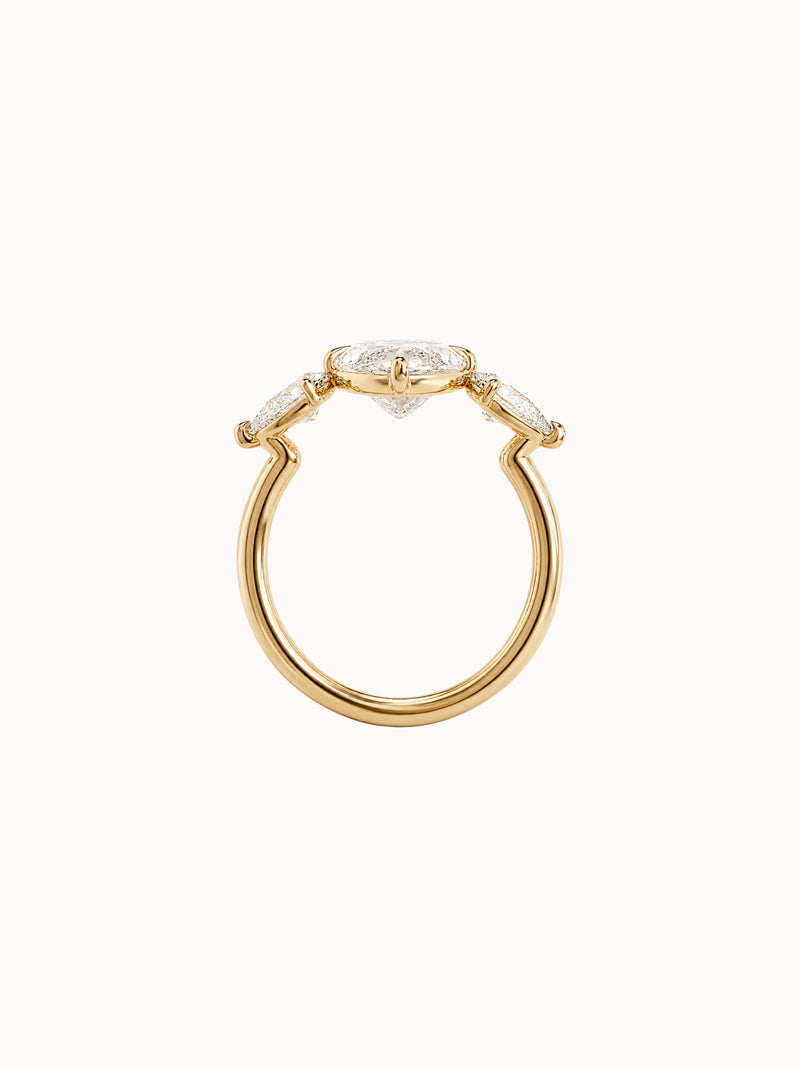
Marquise & Pear Trilogy
From £3,900.00
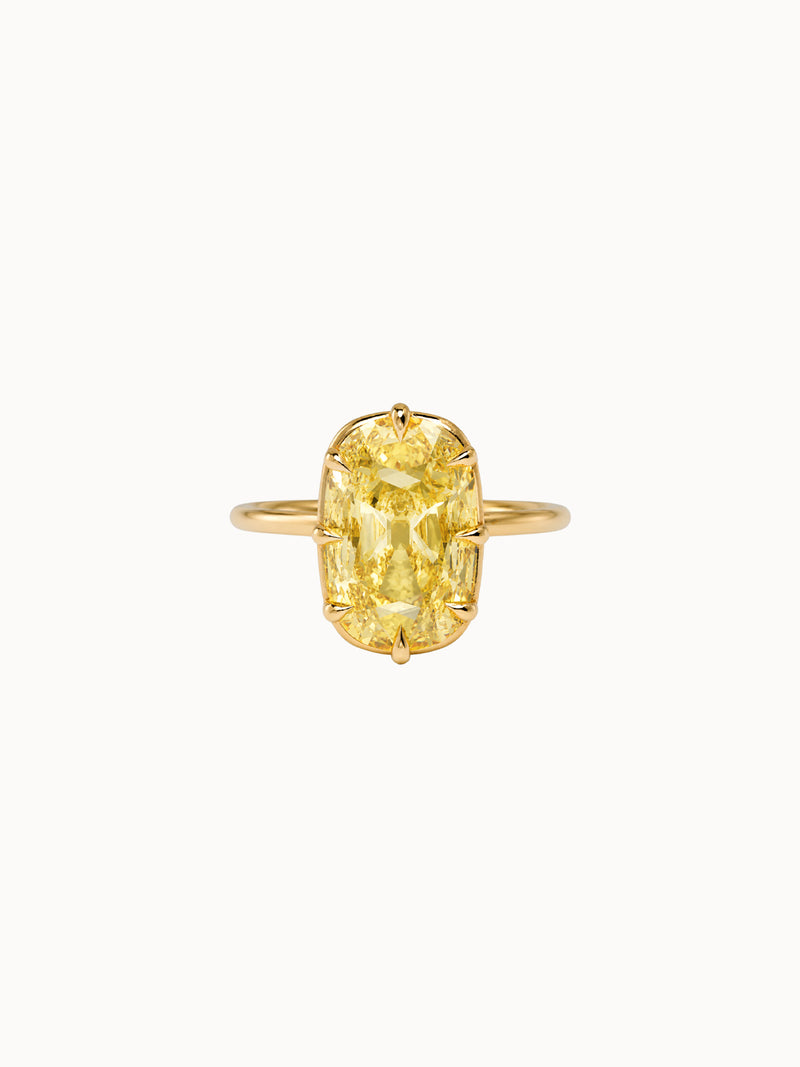
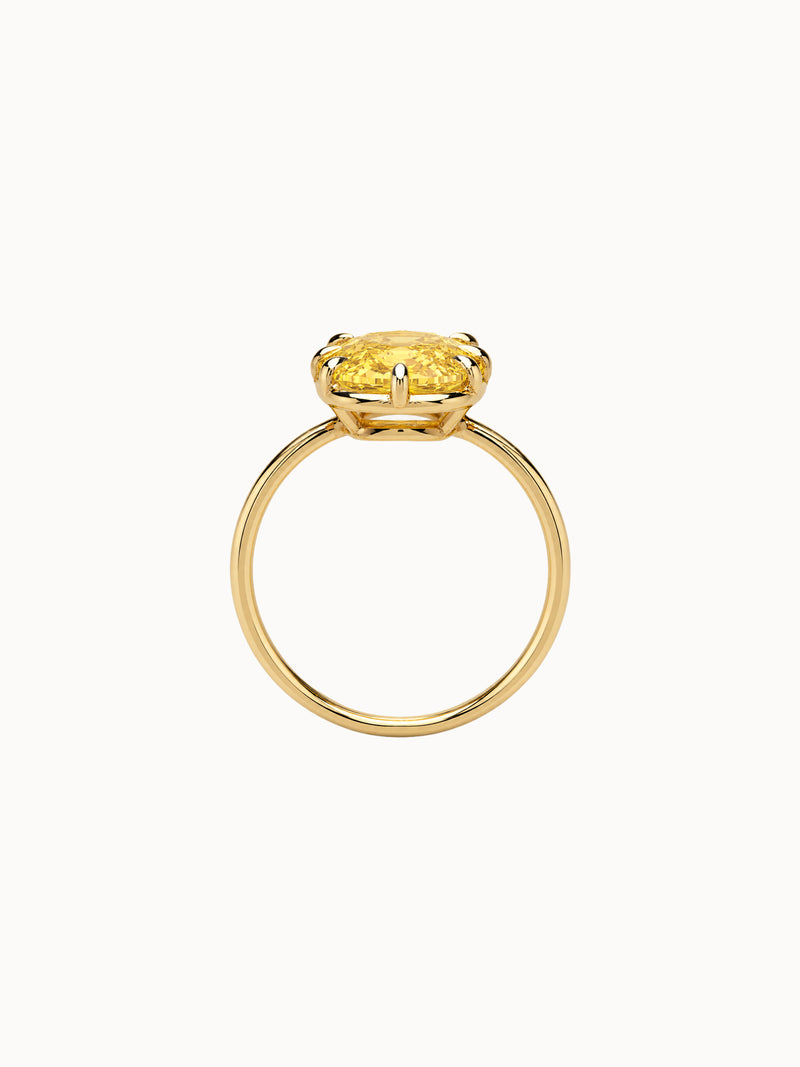
Fancy Yellow Old Mine Cushion in Georgian Setting
From £3,900.00