On stones
Brilliance is a solved problem. Character is not.
A modern brilliant is engineered to perform — to return the maximum light through the table, under a jeweller's lamp, which is the environment it was optimised for. It does that extremely well. What it cannot do is surprise you.

Selected in person
Side by side
The same weight. Not the same stone.
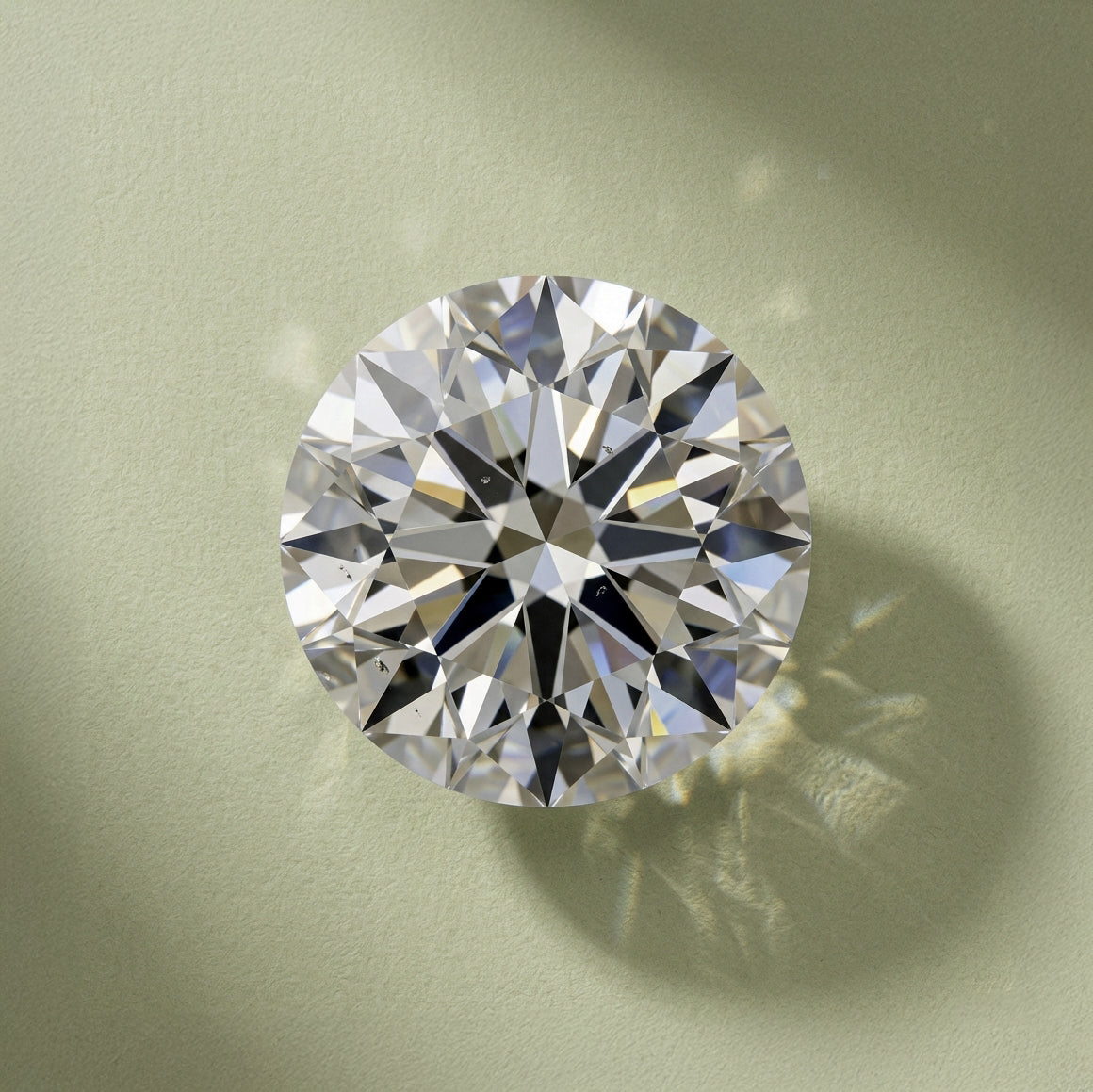
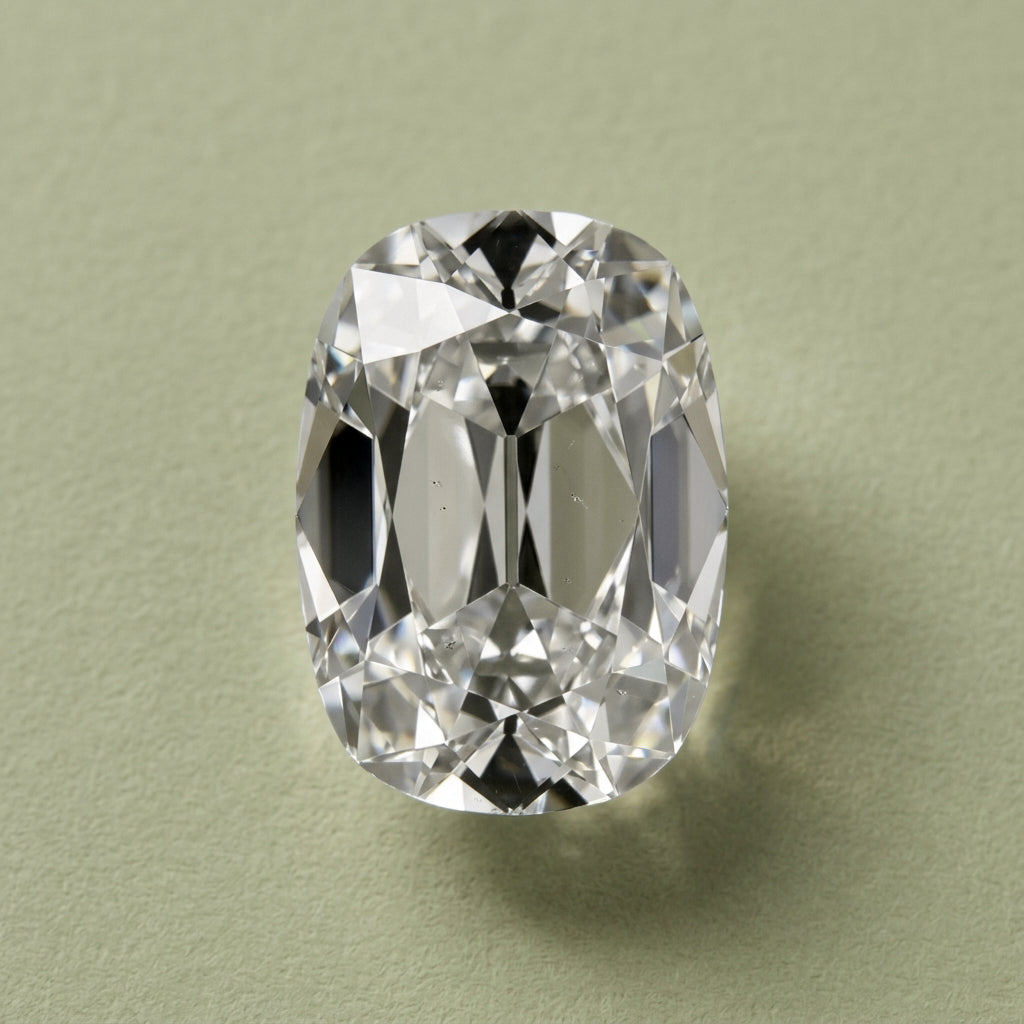
Photographed at the same scale, in the same light, from the same distance. Shown any other way, this comparison proves nothing.
Cut by eye, for candlelight.
Old mine and antique diamonds were cut by hand, by eye, before any of that was calculated, for rooms lit by candles. Smaller table, higher crown, deeper pavilion, open culet. They hold light rather than throwing it back.
Every facet is slightly imperfect, and that is the reason two stones of identical weight and grade sit differently on two different hands. In a modern diamond those would be faults. Here they are the point.
The vocabulary
What to ask for.
The cuts we work with most. Most people arrive drawn to one without knowing its name.
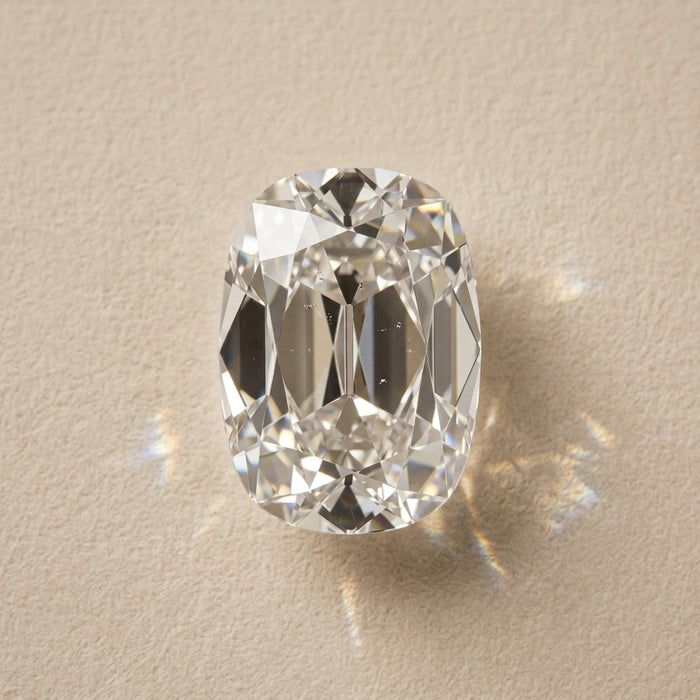
Old Mine Cushion
The house shape. Wide face, high crown, open culet, and no two alike.
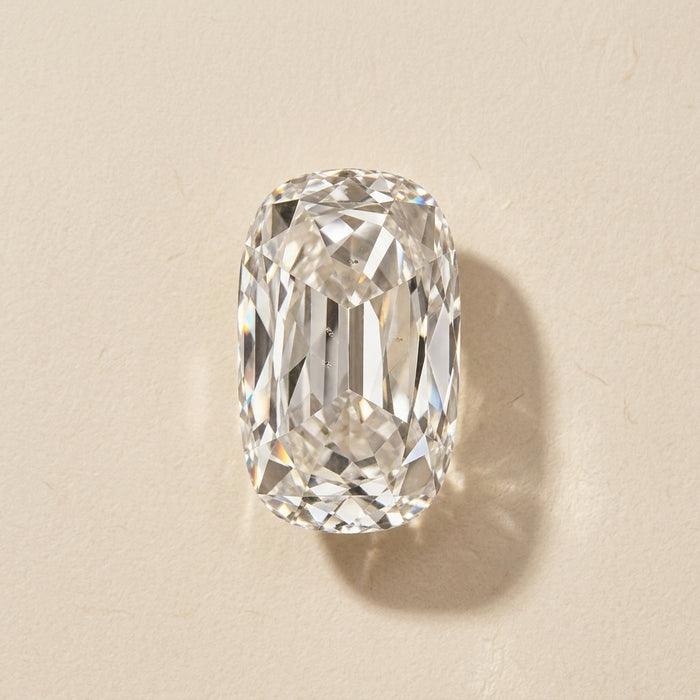
Elongated Cushion
The same cut drawn longer. Reads larger on a narrow hand.
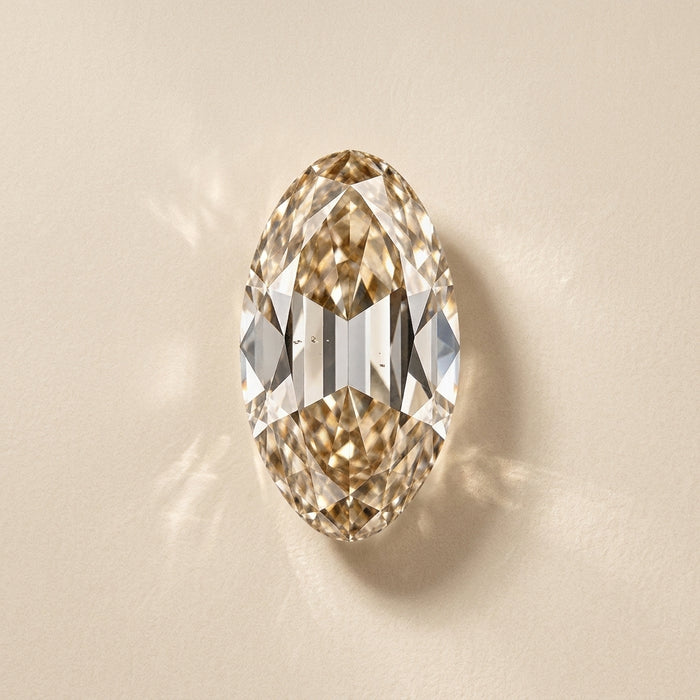
Moval
Between an oval and a cushion. Soft corners, and the one people cannot name.
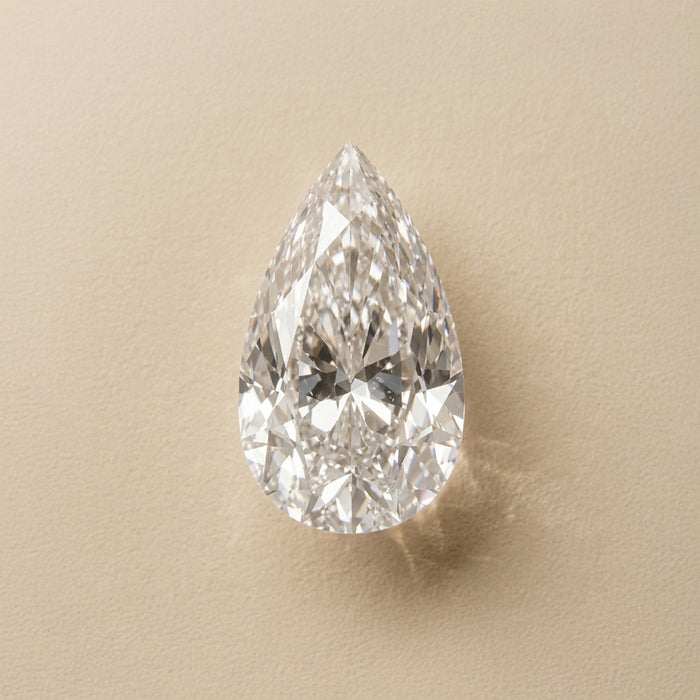
Pear
Directional, and the reason the Sculptural series exists.
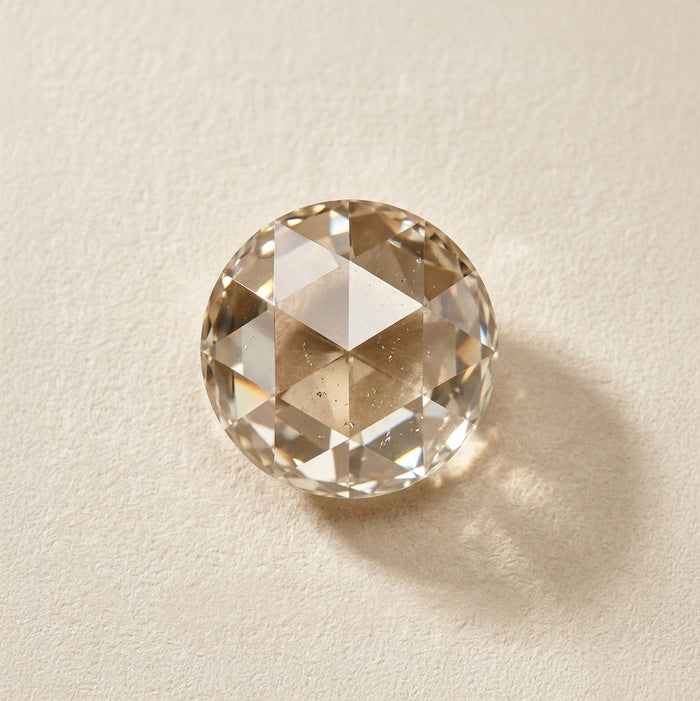
Rose Cut
Flat beneath, domed above. Almost no return — it glows rather than sparkles.
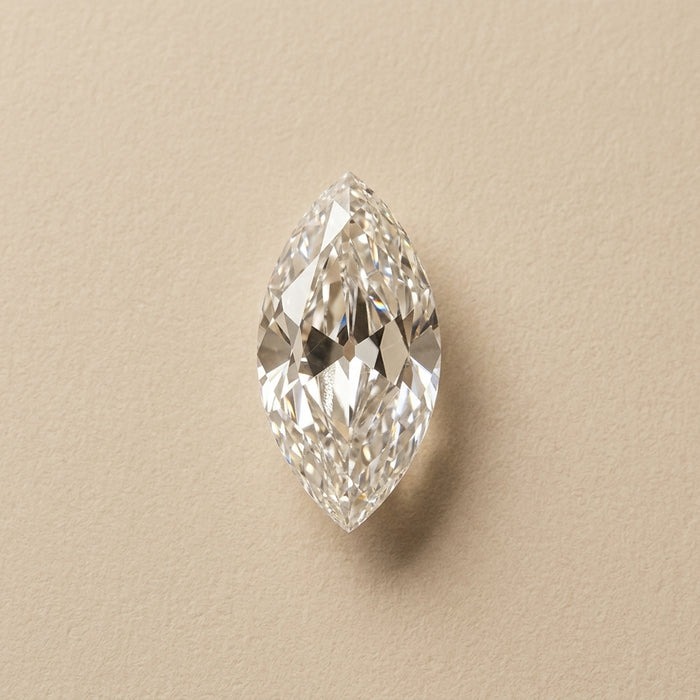
Marquise
Pointed at both ends. The most architectural outline we set.
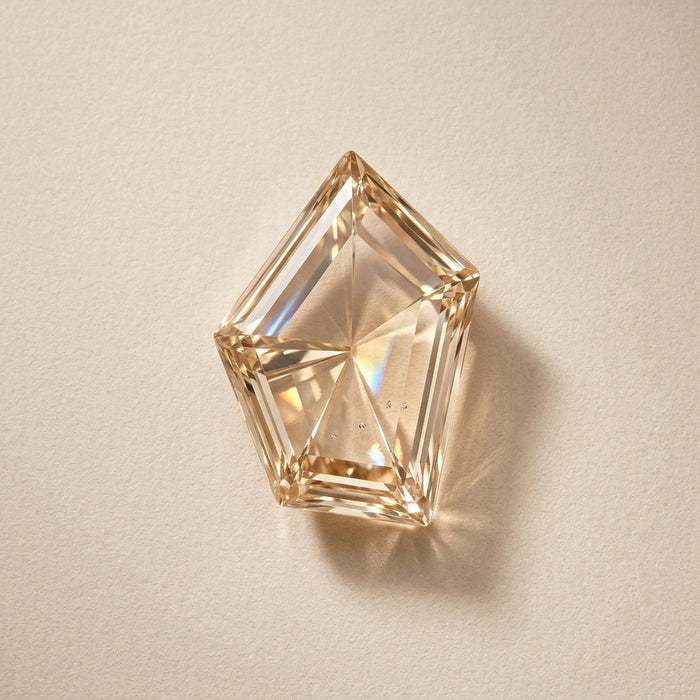
Freeform
Cut to the rough rather than to a chart. One of a kind by definition.
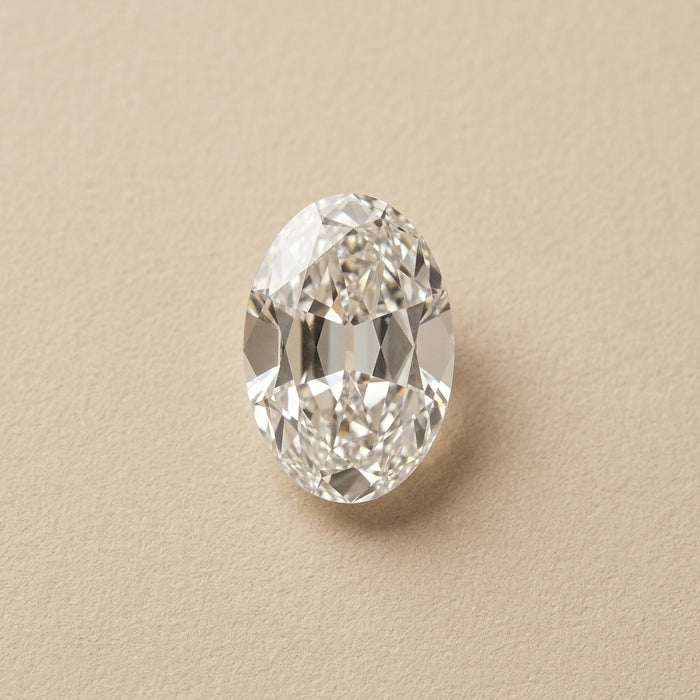
Old Mine Oval
Antique proportions in an oval outline. Length without a modern look.
What we select for.
Face-up spread, balance, and how a stone presents on a hand. Not the number on the report. A 2.00ct old mine cushion that reads small and dull is worth less to us than a 1.70ct that carries its weight across the face and holds light.
A grading report describes a diamond completely and tells you almost nothing about it. It measures how closely a stone approaches an ideal, and character is deviation from the ideal — there is no column for it.
Origin
Natural and laboratory-grown.
We set both, and we have no incentive to move you toward either. The material is the same and so is the optical behaviour; what differs is history and what it costs to have the size you want.
| Natural | Carries a history, and with an antique cut that history is specific — it was cut by someone, for someone, long before it reached you. |
| Laboratory-grown | The same material and the same behaviour under light. Lets you have the character you want at the size you want it. |
| Reclaimed and antique | Stones out of pieces no longer worn. Often the most interesting parcel in the room, and the least predictable. |
| Which we recommend | Whichever suits the piece and the figure. We will tell you what each does to the ring, and then it is your decision. |
Plainly
What we will not tell you.
That a ring is a financial investment. Resale on any diamond, natural or grown, is a fraction of retail, and anyone implying otherwise is selling something. A diamond is an investment in a relationship. Buy it because you intend to look at it for forty years.
We will also not describe a diamond as ethical as though it were a grade. What we can tell you is where a stone came from when that is knowable, and say so plainly when it is not.
On the record
Stated in writing, every time.
| Origin | Natural, laboratory-grown, reclaimed or antique — stated for the individual stone, in writing, with the piece. |
| Certification | Diamonds over 0.50ct carry IGI, GIA or GCAL certification matching the inscription on the girdle. |
| Traceability | We require our suppliers to comply with the Kimberley Process Certification Scheme, the international commitment to keep conflict diamonds out of the global supply chain. Where a natural stone's origin is documented, we pass that on with the piece. |
| Where there is no report | Some antique stones have no modern report and cannot honestly be given one. We say so rather than imply otherwise. |
| What is not claimed | No grade is rounded up, and no stone is described as rare because it is expensive. |
A stone has to be seen moving.
None of this settles anything on a screen. Forty-five minutes, on camera, with the stones under daylight and turning — that is where it is decided.