17 October 2026 · how we work
The number you would rather not give us
Everyone assumes the budget question is so we can spend it. It is so we can stop showing you stones you were never going to buy.

On every form we have, the question people hesitate over is the budget.
The hesitation is always the same thought, and it is a fair one. If I say fifteen, I will be shown fifteen.
So it is worth explaining what the number is actually for, and what it is not.
It is not a stone with a setting added to it
There is no line for the metal, a line for the diamond, and a total at the bottom. That is not how any of this is made, and quoting it that way would not describe what you receive.
What the figure covers is the whole of it. The stone, found rather than ordered. The hours before anything is made — working out what you actually want, which is rarely what the first email says. The drawing. The modelling and the testing that goes with it, because proportions that are convincing on a screen regularly fail on a hand, and it is cheaper for everyone to discover that before the metal is cut. The bench time. And what comes afterwards: sizing, repairs, the warranty, handled by the same people who took the order.
Most of that is someone's attention rather than a material, which is exactly why it cannot be broken into components and added up.
The thing you are actually worried about
That we will take the number and build to it. That saying twenty gets you a ring that mysteriously costs twenty.
We will not pretend this never happens in the trade, because it does.
Here is why it would be a poor way for us to work. Every piece is made singly, after you have chosen it, by a small workshop. We are not clearing stock and we are not hitting a monthly number. What we want is for you to come back in four years for a wedding band, and to tell someone about us in between. A ring sold at the top of a stated budget, which the buyer later works out was the top of their stated budget, produces neither.
So the figure is used as a ceiling, not a target. If the right answer sits well under it, that is what you will be shown, and we will say why.
What moves the number
Four things, in roughly this order.
Carat. The steepest lever by some distance, and it does not rise in a straight line. A stone of two carats costs considerably more than twice a stone of one.
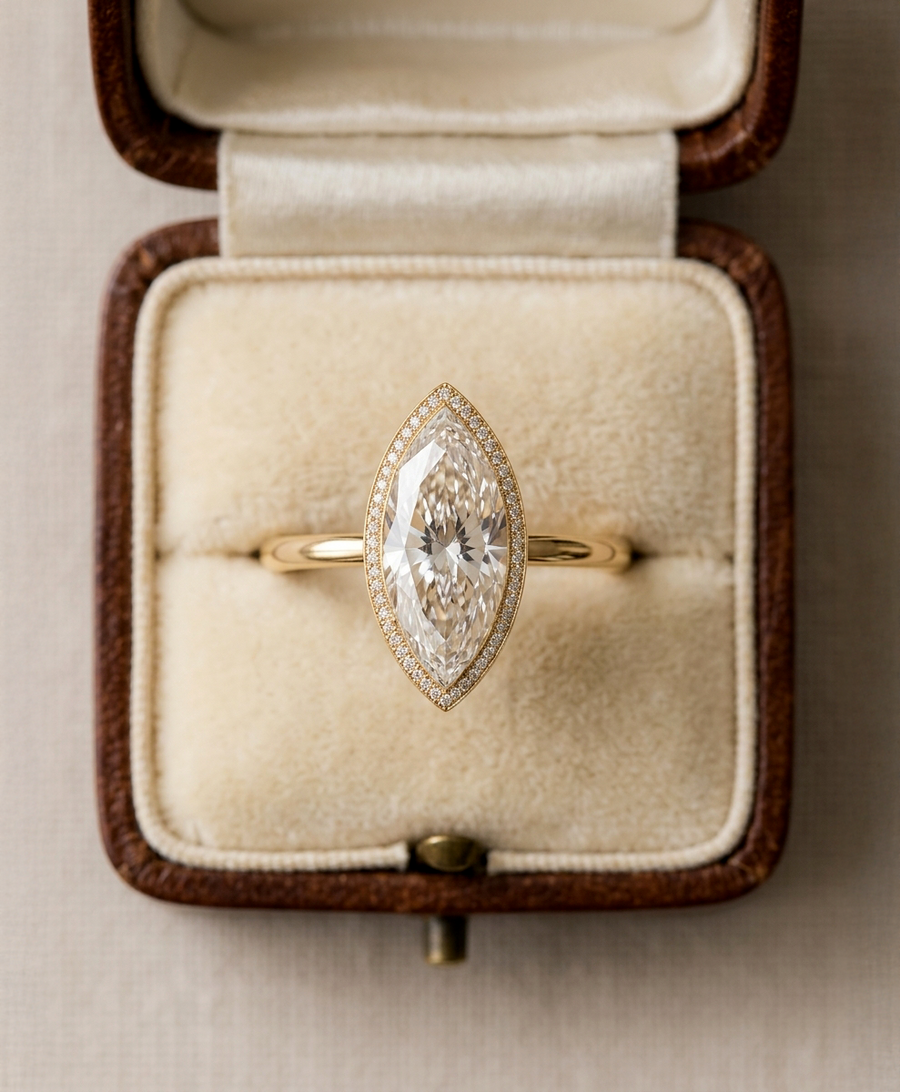
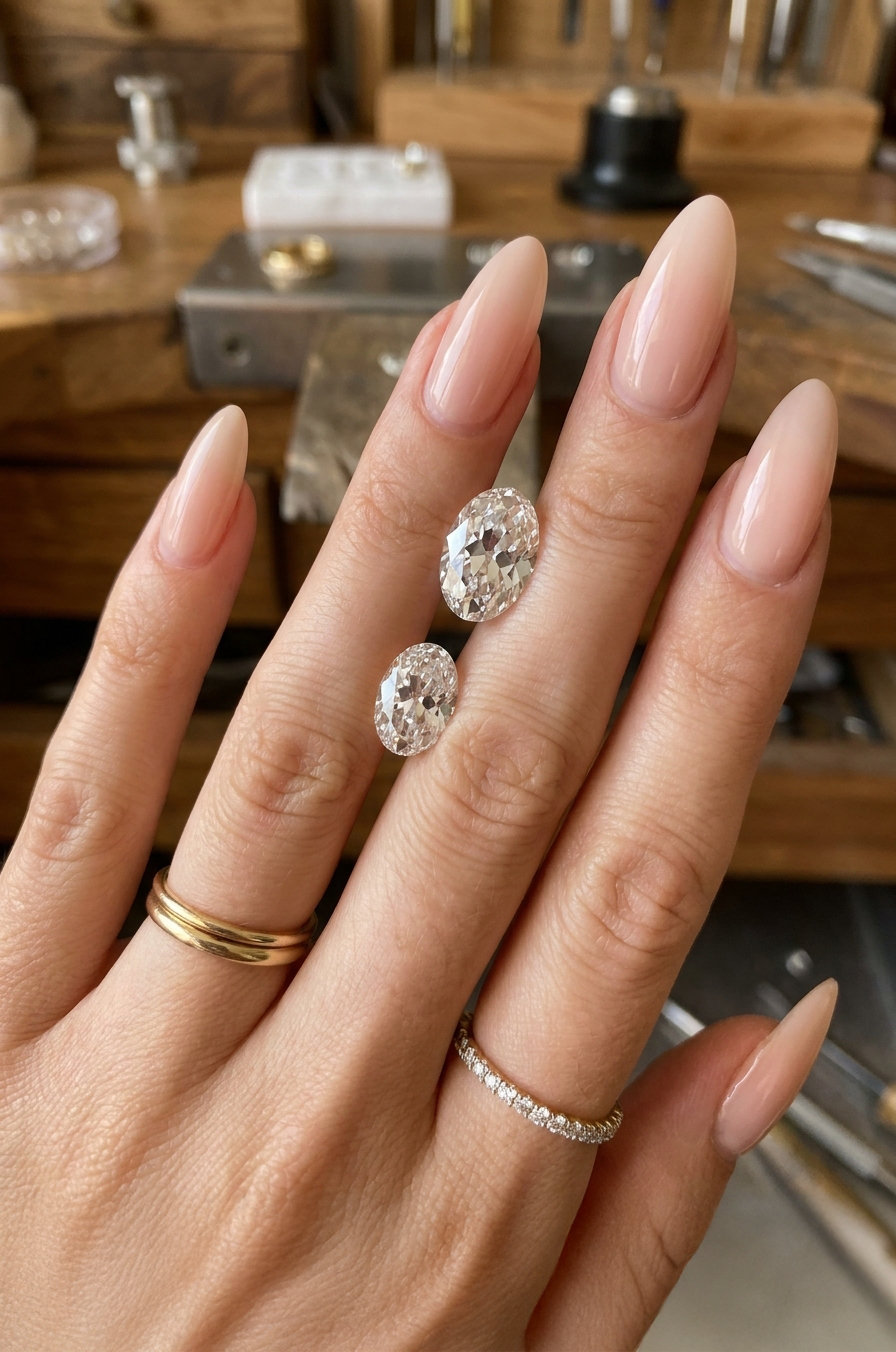
The character of the stone. An old mine cushion with real spread and a lively, uneven personality costs more than a duller stone of identical weight and identical grades. This is the part that photographs worst and matters most.
Origin. Natural, laboratory-grown, antique or reclaimed. We work with all of them and have no reason to push you toward any one.
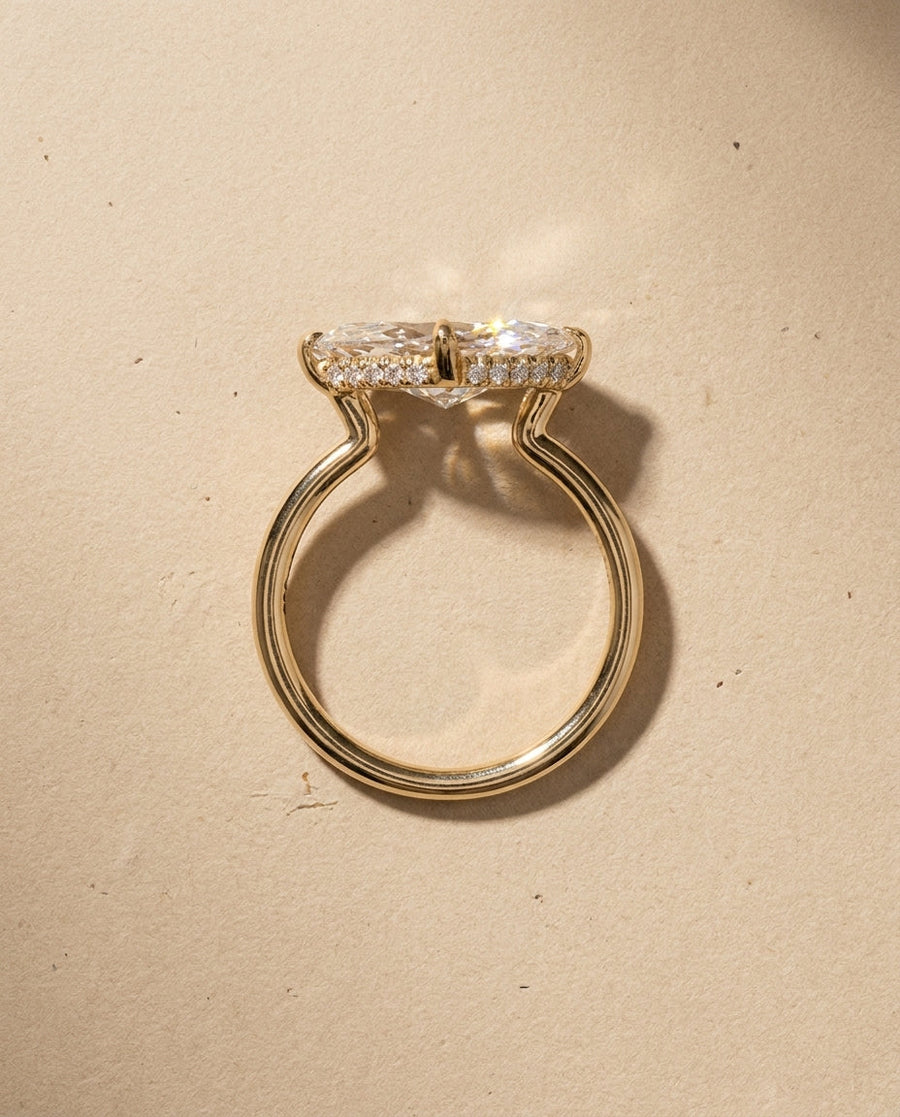
What the piece asks of us. A ring drawn and modelled around an unusual outline takes more of everyone's time than one built on ground we have covered before. Some stones need the gallery opened in a way nothing in the series has needed yet. That shows up in the figure, and we will tell you when it does.
Why there is no price list
We could publish a table saying what each budget buys. It would be wrong within a month.
Stones are found, not manufactured to a specification. What is available in old cuts this month is not what was available last month, and a table implying otherwise would be a tidier answer than the truth.
What we can tell you is the floor. A complete ring, with a certified centre diamond, independently graded and supplied with its report, starts at AU$5,900. Everything above that is a conversation.
If you genuinely do not know
Say so. “Not sure yet” is on the form for a reason, and nobody is penalised for choosing it.
But it is worth knowing what it costs you. Without a figure, the first reply is a wider spread of options and another round of questions — which is fine, it is just slower. With one, we can come back with two or three stones worth discussing.
A range is enough. So is a sentence saying where you would rather not go.
One last thing
The budget is the only question on the form that most people answer defensively, and it is the one that helps you most.
We would rather know the ceiling and work beneath it than guess, show you something you cannot have, and spend the first conversation walking it back.
MARLII LAB · London and Australia