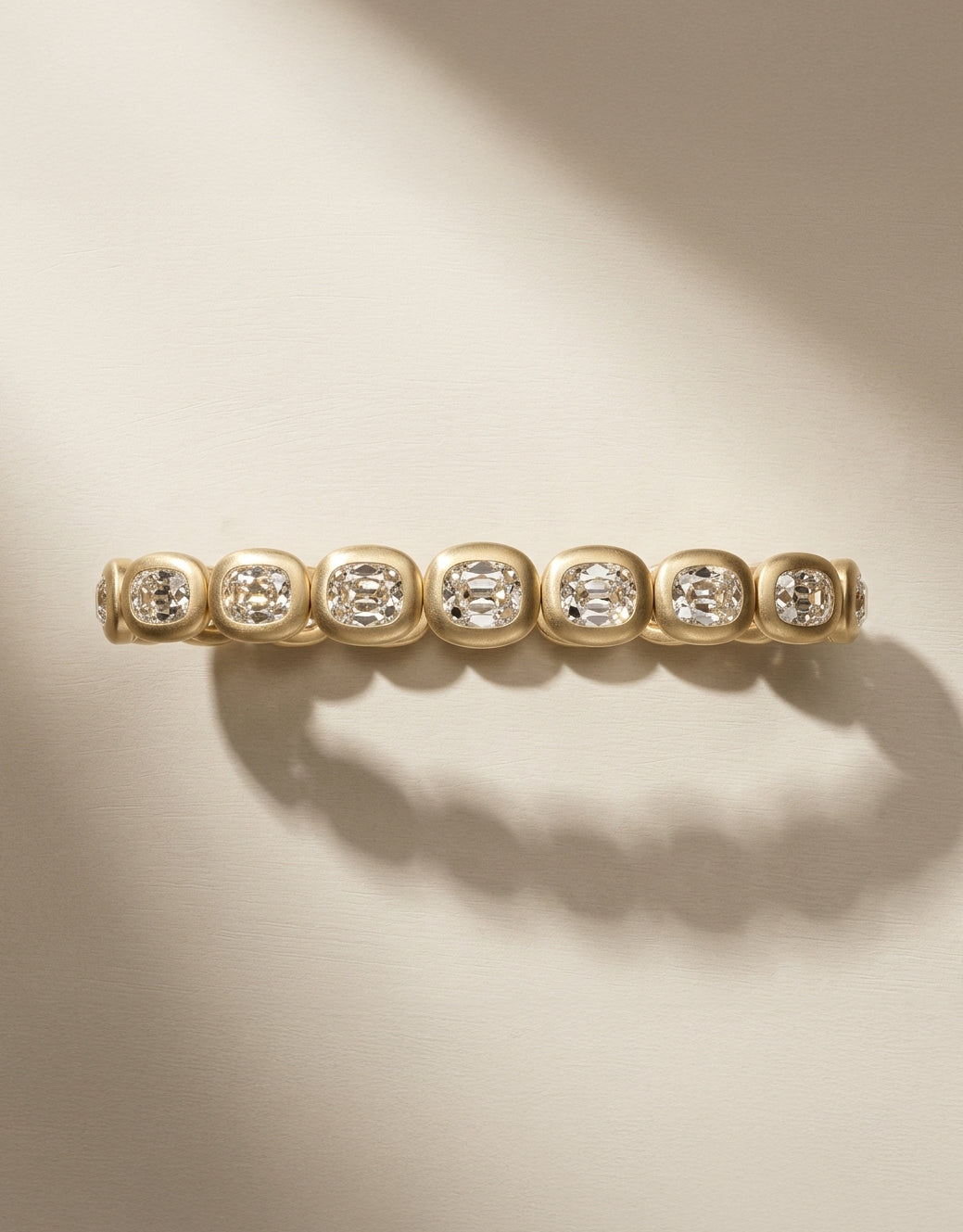
Commissions
A third of what we make was never a design.
Pieces drawn for one person: a stone inherited and re-set, a structure we have not built before, a piece that exists nowhere in the collection. This is the part of the work that does not photograph well in advance.
We reply within one business day, and always within two.
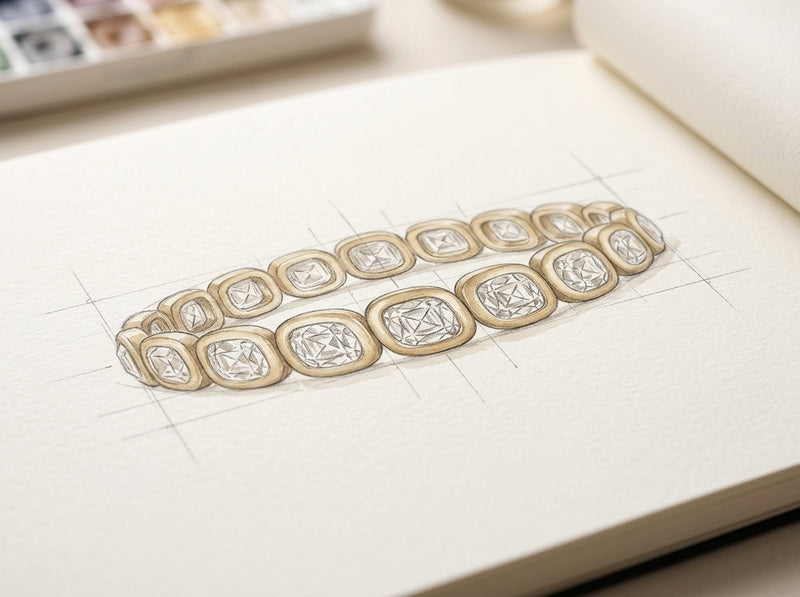
Commissioned
Pieces that existed nowhere else.
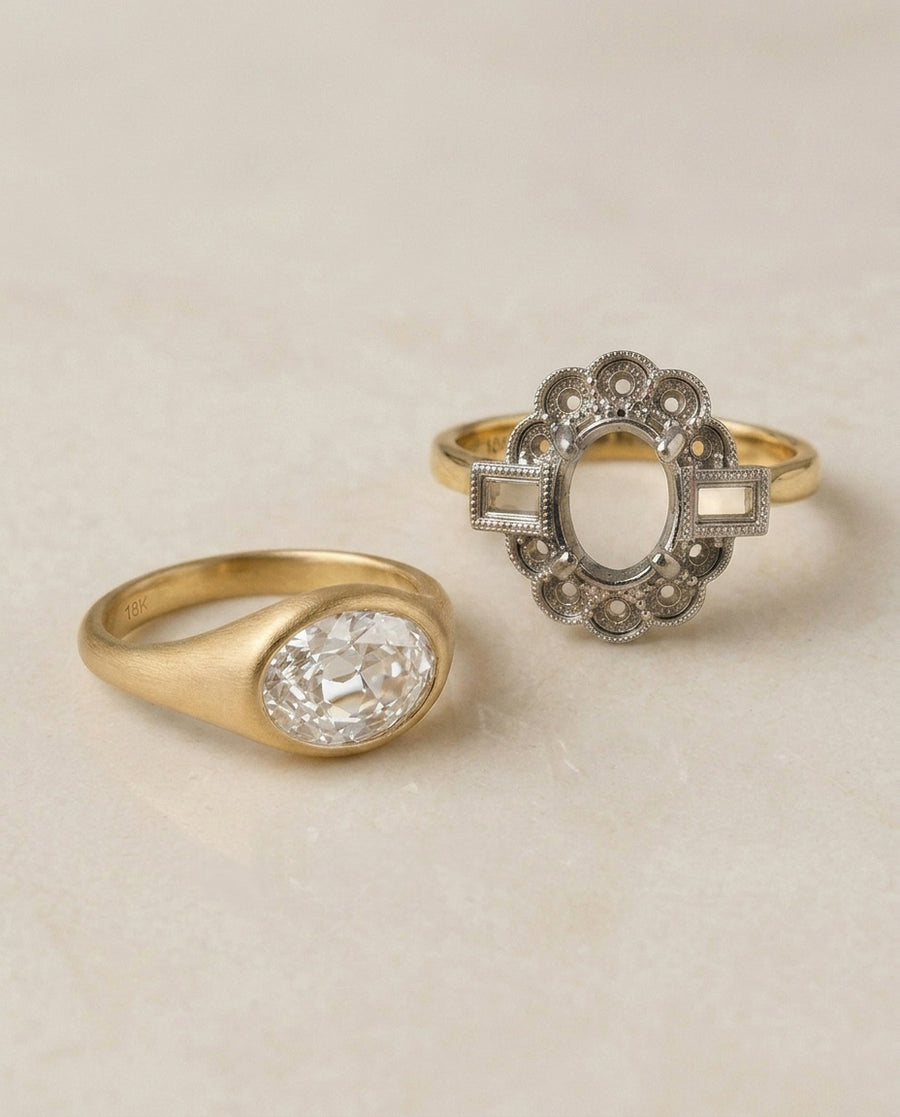
No. 033 — inherited old mine oval
Her grandmother's stone, out of a 1970s cluster and into a bespoke signet style setting. Same diamond, fifty years apart. Accent diamonds used for a pair of earrings.
Not thisThe first direction kept four of the cluster's accent stones around the centre. It read as a smaller version of the ring she was trying to leave behind.
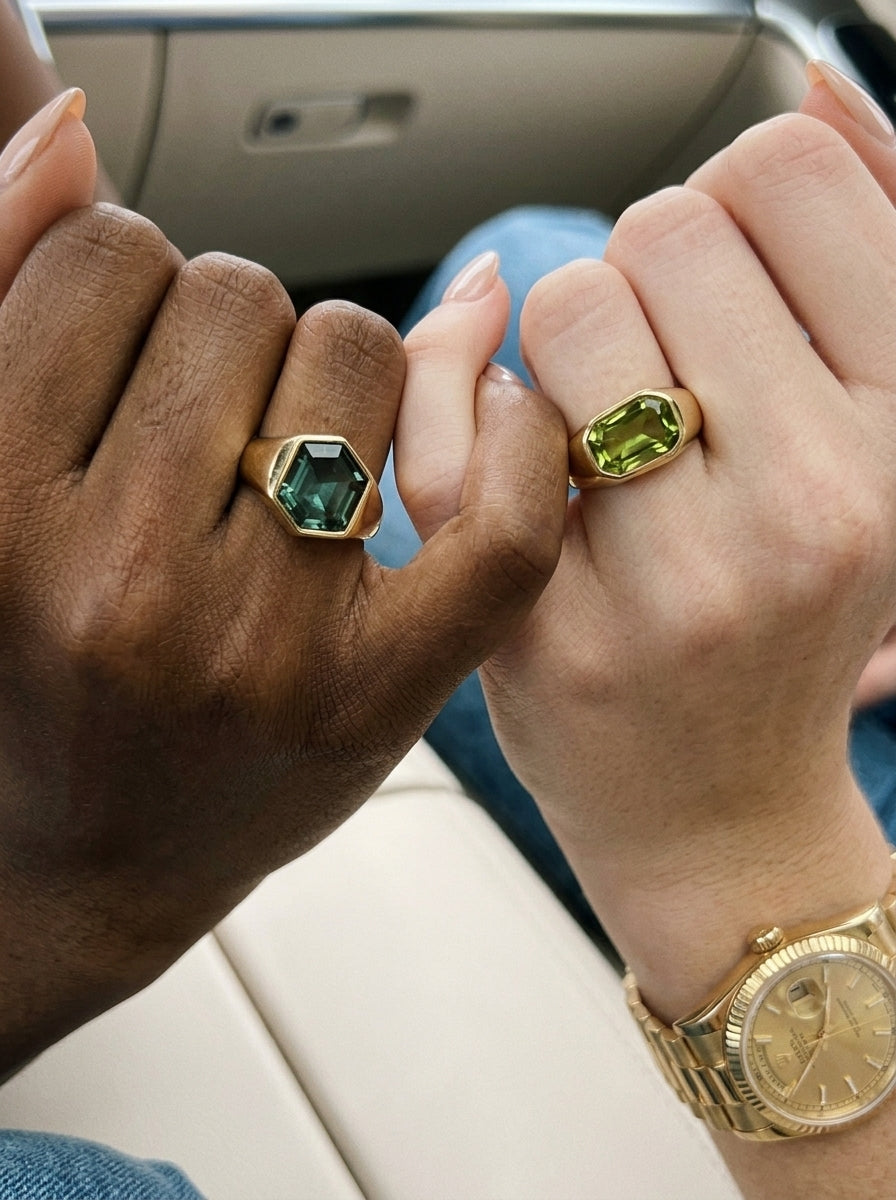
No. 019 — parti sapphire pair
Two rings made together for two best friends, from one parcel of Australian sapphires.
Not thisThe brief was two matching rings. We drew them matching, and they looked like a set rather than like two people. The parcel decided it — no two parti sapphires are the same, so we stopped pretending.
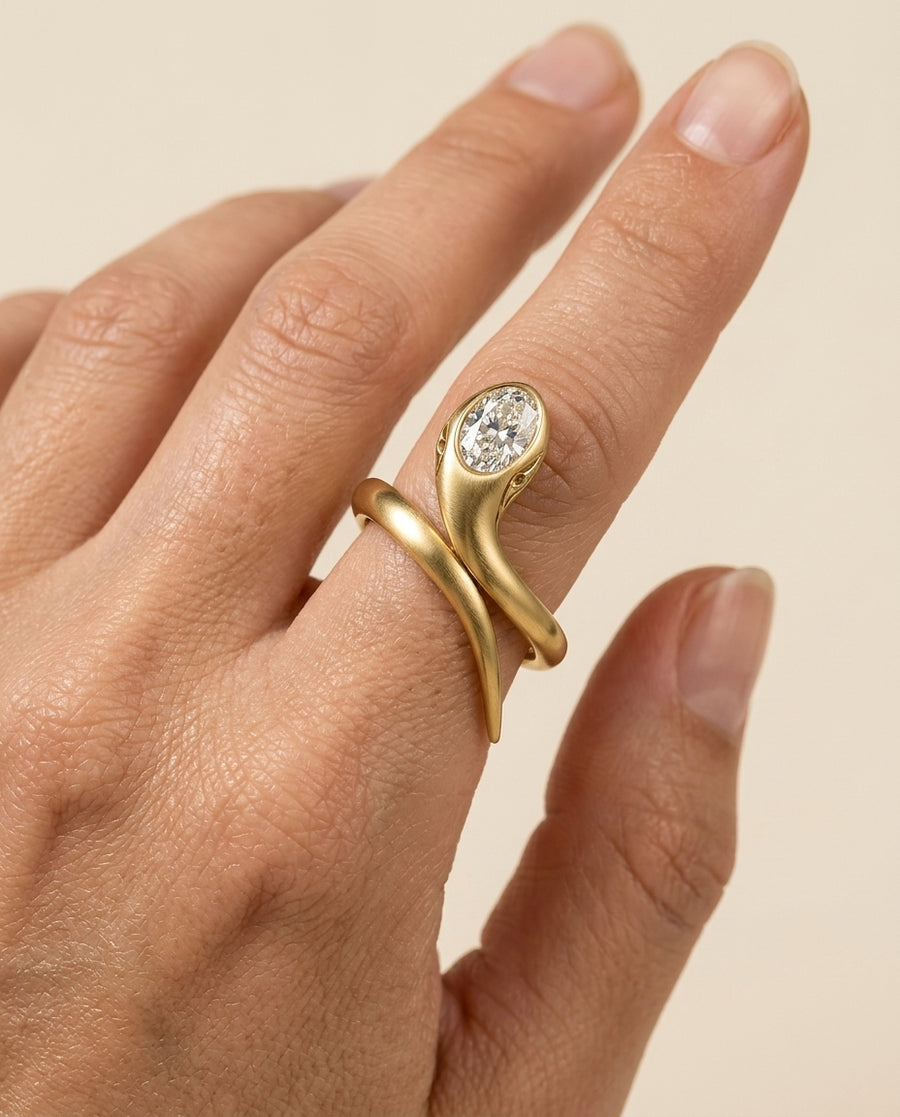
No. 041 — 1.64ct oval cut
No reference and no collection piece. A description, three drawings, sixteen weeks. The brief arrived as a sentence rather than an image — a 1.64ct oval, set low, that did not resemble anything already in the range. The stone was chosen first and measured, and the drawings were made against its actual depth and outline rather than a standard template. Three directions were drawn. Two were discarded at drawing stage, before any metal existed. The third was agreed in writing, modelled, adjusted once at model stage, and then made. Sixteen weeks from the agreed drawing to delivery, most of it in the setting rather than the making.
Not thisThe first of the three. The outline announced itself immediately, and that turned out to be the fault — a shape you can name in one second is a shape you stop looking at in two.
Method
How a commission is made.
Description
You tell us what you are imagining. No drawing is required and none is expected. We agree the figure at this stage, before anything is drawn — a design developed against a real number is a different design from one adjusted downwards afterwards.
Stones
We put options in front of you — the diamonds that suit what you have described, with their documentation and what each does to the piece.
Drawing
The ring is drawn with your stone in it. You will see two directions, not twenty; a commission narrows early because that is how a piece acquires a point of view. This is where the design work happens, and the stage that carries a design fee. It is quoted before any drawing begins and credited against the ring if you go ahead.
Making
Built by hand — in Sydney for Australian clients, in London for clients in the United Kingdom — and not begun until the drawing and the figure are agreed in writing. You see the piece at model stage, before any metal is formed, and can still change it then. The timeline depends on which of the four commissions below it is. Each states its own timeframe.
Delivery
Sized, engraved, documented. With the report for your stone and a written statement of its origin.
What we take on
Four kinds of commission.
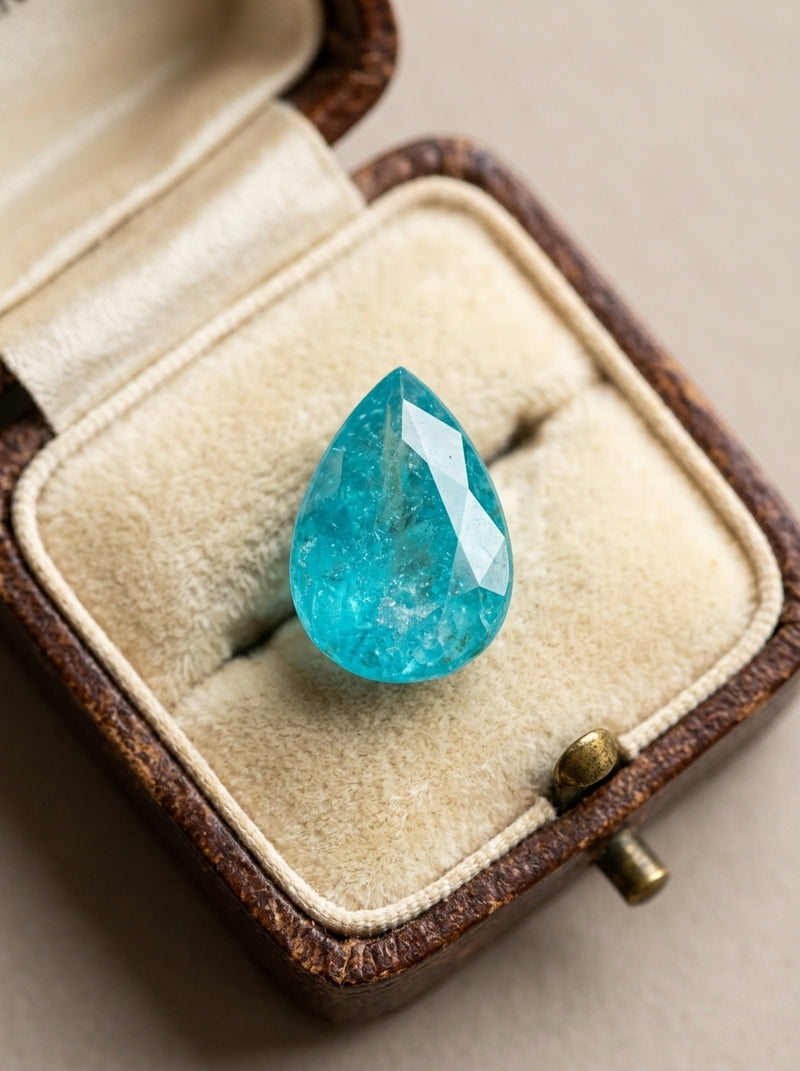
An inherited stone
From AU$7,000 · 10 to 12 weeks
The most common commission. A diamond or gemstone out of a ring no longer worn, moved into one that will be. Usually without recutting.
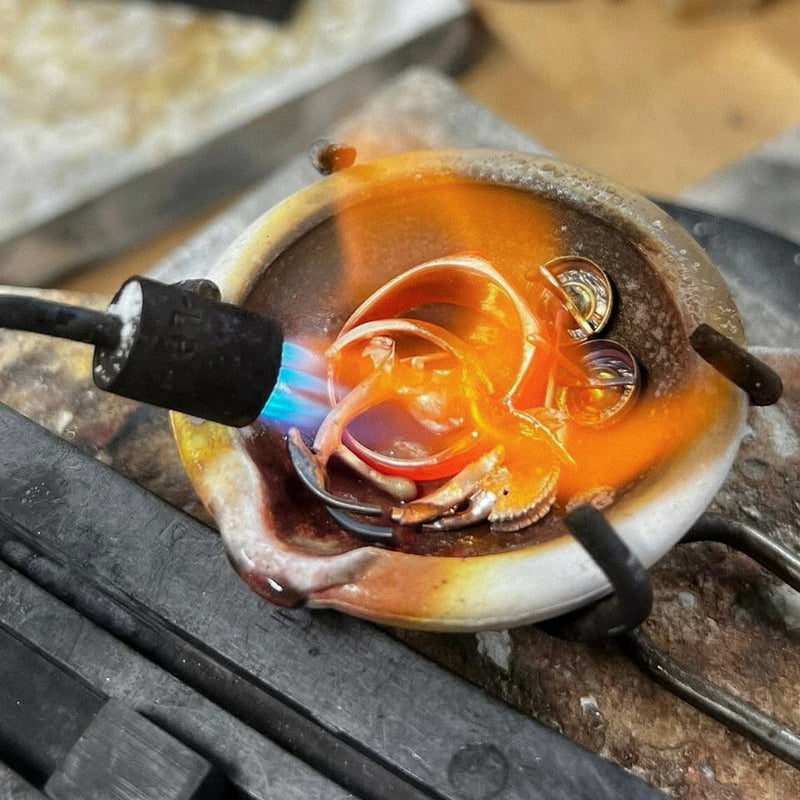
Your own gold
Quoted after assessment · 10 to 12 weeks
Old gold melted and re-made into the piece. It can reduce the cost, though that is rarely why people do it. The metal carries a history — that is the point.
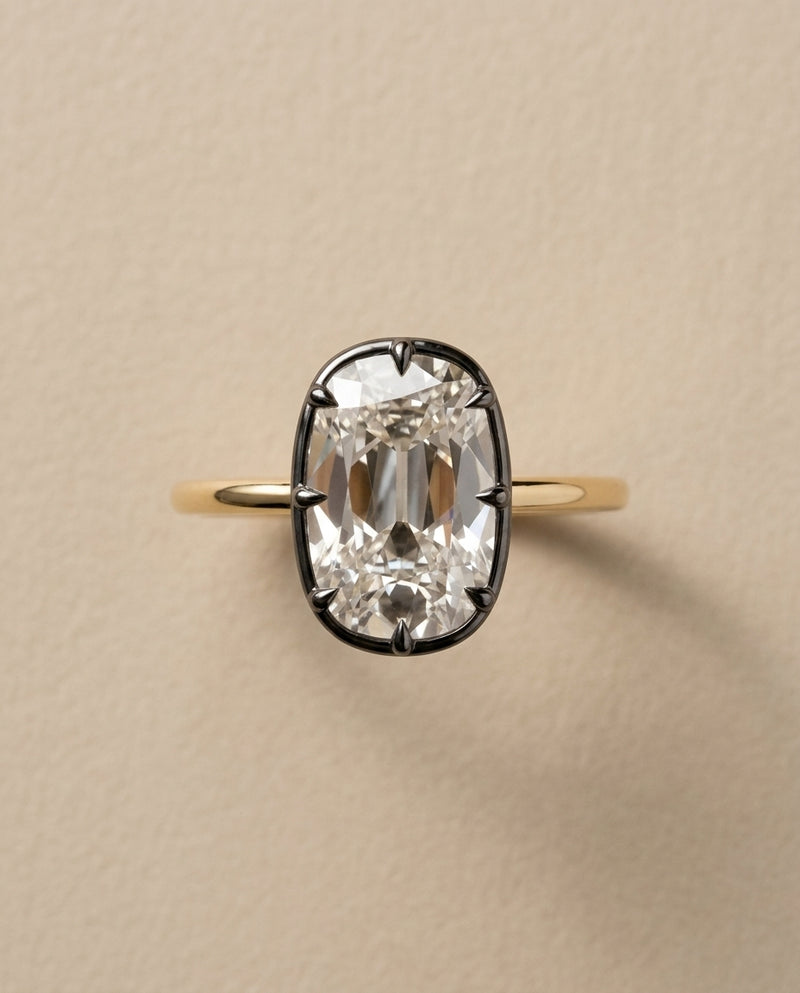
A setting, altered
From AU$6,500 · 12 to 14 weeks
One of the settings in a different shape, a different metal, a wider band, the MARLII Cutaway added or left closed.
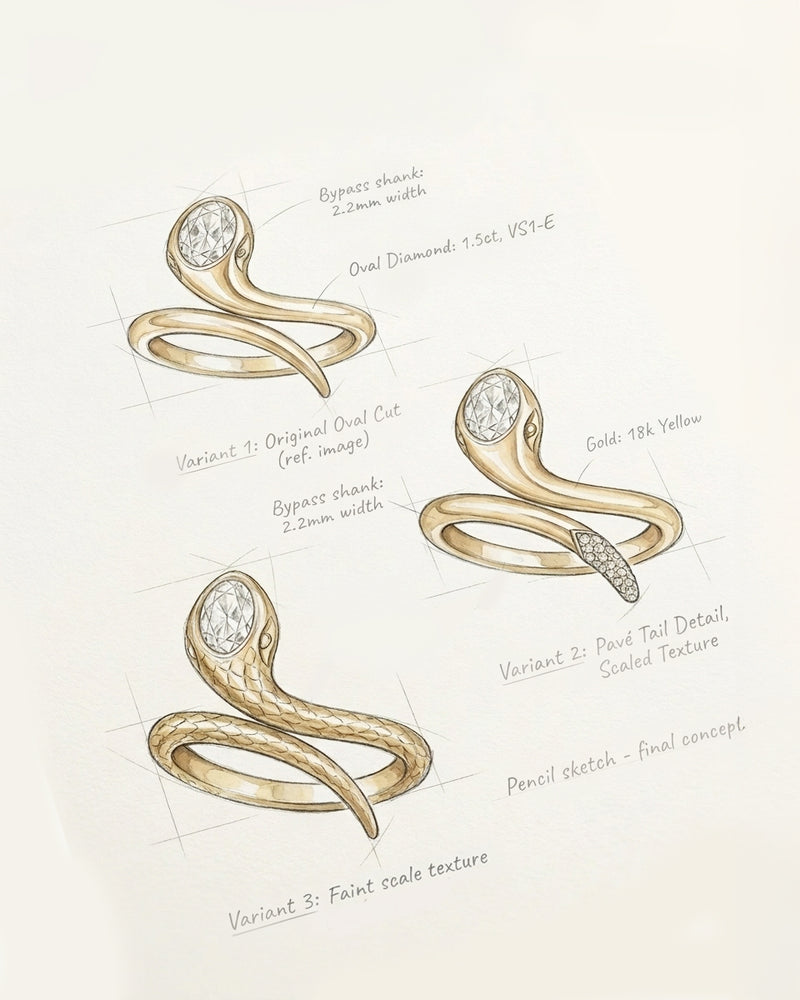
Something unbuilt
From AU$10,000 · 12 to 18 weeks, with complexity
A structure that is not in the range. Little is beyond us. But if a piece cannot be made the way you are imagining it, or not within the figure you have in mind, we will tell you early and show you what would work instead.
Begin
Tell us what you are imagining.
Answer what you can, as best you can — most commissions begin with a description and a photograph of something close, but not quite right.